Chicago Bicycle
Accident Lawyer
Accident Lawyer
Injured in a Bicycle Accident? We Can Help.



The most dangerous intersections for cyclists in Chicago: Chicago has more than enough. The Windy City has more than its fair share of ghost bikes in places like Logan Square, Jefferson Park, and Wicker Park, reminding everyone of the risks that cyclists take when they decide to head out.
Advocacy groups like Christina Whitehouse’s Bike Lane Uprising and the citywide Active Transportation Alliance have been lobbying for more protective bike lanes and bike-friendly traffic signals, but the city is not doing enough to implement these fixes.
As such, road users must protect themselves and consult with a personal injury attorney if they’ve been harmed while biking. Contact a bicycle accident lawyer in Chicago for a free legal consultation about your legal rights after a bike crash.
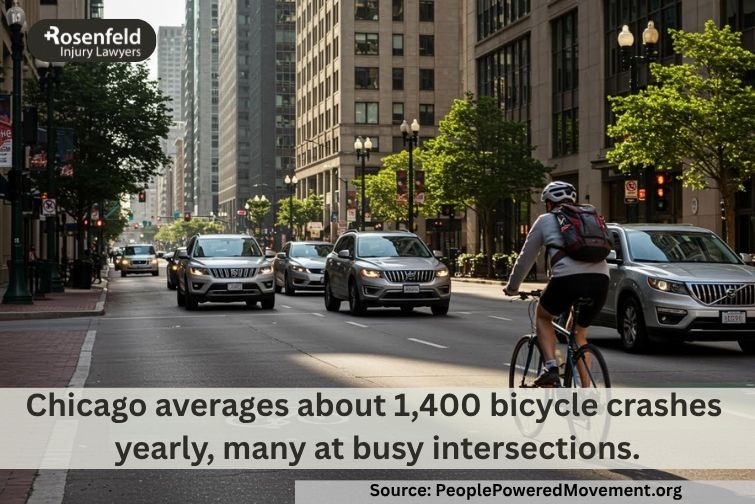
According to the Insurance Institute for Highway Safety, 27% of fatal bicycle accidents occur at intersections. These areas are difficult to navigate safely due to the number of vehicles turning and conflicting traffic flows.
In some places, limited visibility can make it even more difficult to stay safe, such as blind corners near overpasses. Lastly, drivers’ reckless behaviors, like texting while driving or failing to check blind spots, can all cause serious injuries for cyclists. These collisions may result in severe consequences, including long-term care costs for a cycling spinal injury that require ongoing medical support.
Right Hooks – These occur when a driver turns right in front of a cyclist who is biking in the curb lane. According to Chicago Municipal Code 9-52-010(a), bikers have the same rights and responsibilities as cars, meaning that they have priority if going straight. Unfortunately, many cars fail to recognize this and will turn in front of them anyway.
Left Hooks – Left hooks occur when a cyclist who is biking through an intersection is hit by a car that is turning left. Like right hooks, these can cause devastating damage, and they are also primarily the driver’s fault.
Dooring – These common accidents occur when the occupant of a parked vehicle opens their door into a cyclist’s path. While they can occur in parking lots, they are more common with street parking. Knowing how to prove fault in a Chicago dooring accident can help cyclists understand what evidence may be needed.
Rear-End Collisions – Wherever there are no protective bike lanes, cyclists are at risk of being rear-ended when a car follows them too closely. This often occurs because a vehicle takes much longer to stop than a bicycle. Understanding what to do after a taxi hits your bicycle in Chicago can help injured cyclists protect their rights after a crash.
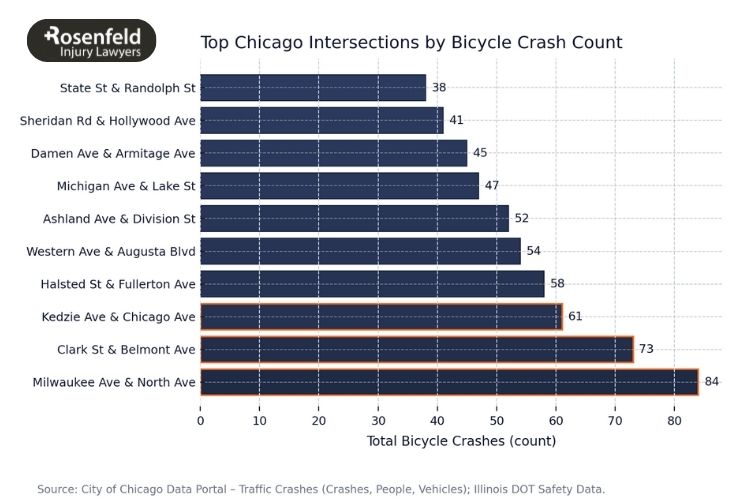
The most dangerous intersections for cyclists in Chicago include North Milwaukee Avenue, North Avenue, and Western Avenue. Due to high traffic volumes and limited bike lanes, there are significant safety concerns for those who want to ride their bike to work or for leisure. Similar concerns can arise with bike accidents in Champaign, where cyclists may also face risks on busy roads and intersections.
However, other streets have also become notorious for their high accident rates. These include the following intersections.
According to the City of Chicago, Milwaukee Avenue is a bike highway, with over 20,000 cyclists using it daily. However, due to heavy traffic, inadequate cycling infrastructure, and inattentive drivers, it also has the most dangerous bike lane in the city.
Tragically, North Milwaukee Avenue has claimed more than one life. Nick Parlingayan died in May 2022 after being hit in Old Irving Park near the 3800 block of this notorious street. Carla Aiello was also killed in 2019 on this same stretch, near the intersection with Kilbourne Avenue.
The intersection of Milwaukee and Kostner is particularly dangerous because it is right next to Schurz High School. Thousands of pedestrians, bicyclists, and drivers turn on these streets daily, significantly increasing the risk. If a collision occurs, knowing the steps for filing a police report after a bike crash can help preserve important information about the incident, including issues related to rideshare insurance coverage for bicycle accidents.
There are also no protective bike lanes, and the local alderman has been slow to suggest infrastructure upgrades. According to Block Club Chicago, this one street had 50 crashes and three fatalities from 2020 to 2022.
Clark Street has a protected stretch of road between Hollywood and Devon with concrete barriers, curb extensions, and pedestrian refuge areas. However, there are no protected bike lanes at Lincoln and Clark. When crashes happen in these areas, injured riders may need to understand their options for compensation for a broken bone bicycle injury.
This area of the Lincoln Park neighborhood is the road leading to the Lincoln Park Zoo, a popular destination for tourists and bicyclists. Due to the heavy pedestrian traffic, this is a difficult place for cars to navigate, especially because of its diagonal configuration, which creates large blind spots. As such, it’s no surprise that there are frequent accidents in this area, making questions about left hook bike crash liability especially relevant when a turning vehicle collides with a cyclist.
Nicknamed the Six Corners, the intersection of Irving Park, Cicero, and Milwaukee in Portage Park is notorious for crashes. These three streets surround the Six Corners shopping district, which attracts thousands of shoppers and bicyclists daily. Portage Park Elementary School, which has over 900 students, is also nearby, increasing car and foot traffic. In these situations, understanding how bicycle versus car accident cases work in Chicago can help injured cyclists understand their legal options.
Portage Park had 50 serious or fatal car accidents in 2023, and police reports show that a single one-mile area has been the site of over 2,600 vehicle crashes in the last five years.
While cycling advocates and community groups are attempting to improve traffic safety in coordination with the Chicago Department of Transportation, the number of car accidents and fatal bike crashes shows there is a long way to go. Serious collisions can also result in facial trauma in bike crashes, making continued efforts to improve cyclist safety particularly important.
This six-way intersection experiences heavy traffic flow, high foot traffic, and thousands of cyclists passing along its paths every day. Each of these streets is notorious for high-speed accidents, and Milwaukee Avenue has the highest bike accident rate in the entire city. Cyclists injured in similar situations may benefit from speaking with an Oak Park, Illinois bicycle accident attorney.
When they converge, cyclists face serious challenges, especially because this Chicago intersection’s very nature makes it challenging to navigate. There are large blind spots, confusing traffic signals, and little bike-friendly infrastructure. Community remembrance can also take the form of ghost bike memorials in Chicago, which honor cyclists who have lost their lives in crashes.
Despite many bike-friendly infrastructure updates, Chicago remains one of the worst cities for cyclists in the United States. Wicker Park is considered the most dangerous area in the city. North/Damen/Milwaukee is a big reason why bicyclists fear this area the most. In these situations, dashcam and traffic camera evidence after a bike crash may help provide important details about what happened.
While many drivers might be concerned by larger streets like Division Street or Roosevelt Street, these are not necessarily the most dangerous places for those on bicycles for a few reasons, including the following. Cyclists should still remain alert and know how to respond when dealing with road rage while biking, particularly when encountering aggressive or impatient drivers. Understanding evidence police use in a hit-and-run cycling case can also be important after a crash.
High Traffic Volume – Bicycles make up approximately 4% to 7% of traffic on Milwaukee Avenue every day, which is part of the reason why it’s considered the deadliest corridor for those on bikes. However, all these streets are heavily traveled by bicycles, pedestrians, and cars. Understanding why large trucks pose a risk to cyclists can help explain why extra caution is needed.
Complex Intersections – Areas like North, Damen, and Milwaukee are incredibly challenging to navigate, even for drivers. The traffic signals are often too long or too short, and it’s not always obvious when vehicles can turn. These dangerous conditions can sometimes contribute to severe outcomes, including catastrophic limb-loss bicycle injuries.
Poor Visibility – While the CTA is incredibly useful, it also requires large overpasses that can make it hard to see a low-profile vehicle like a bicycle. A driver who isn’t paying close attention could easily miss a bicyclist attempting to turn from under an overpass, such as on bicycle accidents on Milwaukee Avenue in Chicago.
Distracted Driving – Though texting and driving are illegal in Illinois under 625 ILCS 5/12-610.2, many in Windy City still choose to use their phones while driving. This makes them more likely to miss a bike trying to turn, which is especially hazardous in busy areas like Lincoln and Clark, a popular tourist spot and shortcut to the Lakefront Trail. Riders should also prepare for winter cycling gear and road hazards in Chicago to stay safer during difficult conditions.
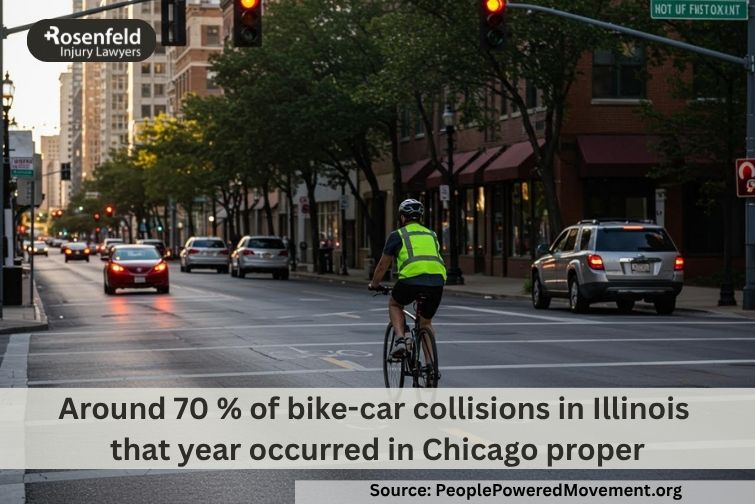
When passing through the most dangerous intersections for cyclists in Chicago, you must drive defensively and anticipate potential hazards. Follow these tips to stay safe, including understanding a truck’s No-Zones so you can recognize areas where truck drivers may have limited visibility.
Be Predictable and Visible – Wear light-colored clothing and do not make erratic movements. Always use hand signals, which are required under §9-52-045 of the Chicago Municipal Code. You should also have reflectors and lights to understand how to stay safe cycling at night in Chicago.
Check for Potential Hazards – Approach intersections with caution, especially those known for being dangerous.
Position Yourself Strategically – Try to stay in the right-hand third of the lane so you have plenty of passing space.
Make Eye Contact – Look at drivers while you are crossing an intersection.
Use Alternative Routes – Try using the Lakefront Trail or quieter streets when possible.
Be Extra Cautious During Especially Dangerous Times – Pay close attention during rush hour and late at night, when it may be harder for drivers to see you. Following Illinois distracted driving laws that protect cyclists can also help explain how driver behavior affects cyclist safety.
If you’ve been harmed at a dangerous intersection in Chicago, it is crucial that you act quickly, both so that you can recover compensation and to ensure your own safety. Speaking with a legal professional familiar with bicycle accidents on Ashland Avenue in Chicago can help you understand your next steps.
Get to a sidewalk or other protected area as soon as possible, then look yourself over for any potential injuries.
Tell the dispatcher your exact location, then ask for the Chicago Police and an ambulance to be sent to your location.
If the driver has stayed on the scene, ask for their insurance information and contact details. You should also take pictures and videos of the accident scene. If a collision involves a large commercial truck, documenting the scene can also be important when evaluating liability in a truck underride accident. Learning about the safest places to bike in Chicago can also help riders make safer choices.
Always go to the hospital as soon as possible so you can be sure you’re not seriously hurt.
Call us to schedule a free case review and learn about your legal rights.
Our attorneys will guide you through the entire legal process, including:
All road users must protect one another and share the road. However, Chicago’s dangerous streets can lead to serious accidents for bike riders. Thankfully, our team is here to help. We have a 98% success rate and have recovered over 450 million in damages for our clients. To schedule a consultation with a bicycle accident lawyer serving Illinois, call us or use our online contact form. Riders can also learn more about Jason Sherwood’s work on cycling injury cases and avoiding a left-hook bike accident to better understand one of the common dangers at intersections.
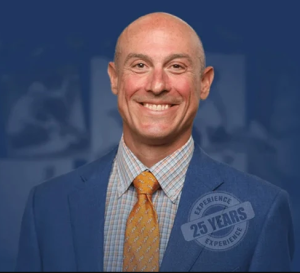 Legally Reviewed By
Attorney Jonathan Rosenfeld
Reviewed by Attorney Jonathan Rosenfeld The material on this page has been legally reviewed by Attorney Jonathan Rosenfeld of Rosenfeld Injury Lawyers LLC. Mr. Rosenfeld and his team have experience representing injured cyclists in bicycle accident cases in Chicago. With a focus on personal injury law, they help bicycle accident victims understand their legal options and pursue compensation for medical expenses, lost wages, and other damages resulting from their injuries.