- Free Consultation: 312-646-3708 Tap Here To Call Us




Where Are the Safest Places to Bike in Chicago for Cyclists?


Chicago has grown into one of the most bike-friendly big cities in the country, but not every street feels the same once you are on two wheels. Some routes give you real separation from traffic. Others leave you sharing tight lanes with fast-moving cars.
If you ride here often, you already know the difference between a relaxed ride and a white-knuckle one. This guide breaks down the safest places to bike in Chicago, from protected bike lanes to scenic off-street trails, so that you can plan rides with more confidence and less stress.
Why Choosing the Right Route Matters
Where you ride shapes how safe you are, a street with physical separation between bikes and cars carries far less risk than a painted lane next to moving traffic.
Chicago now has over 500 miles of bikeways, and roughly 42% of that network is considered low-stress (CDOT). That means more options than ever for cyclists who want to avoid heavy traffic and ride in places that actually feel protected.
Still, infrastructure varies block to block. Knowing which routes offer true separation helps you make smarter choices every time you head out.
The Lakefront Trail: Chicago’s Signature Ride
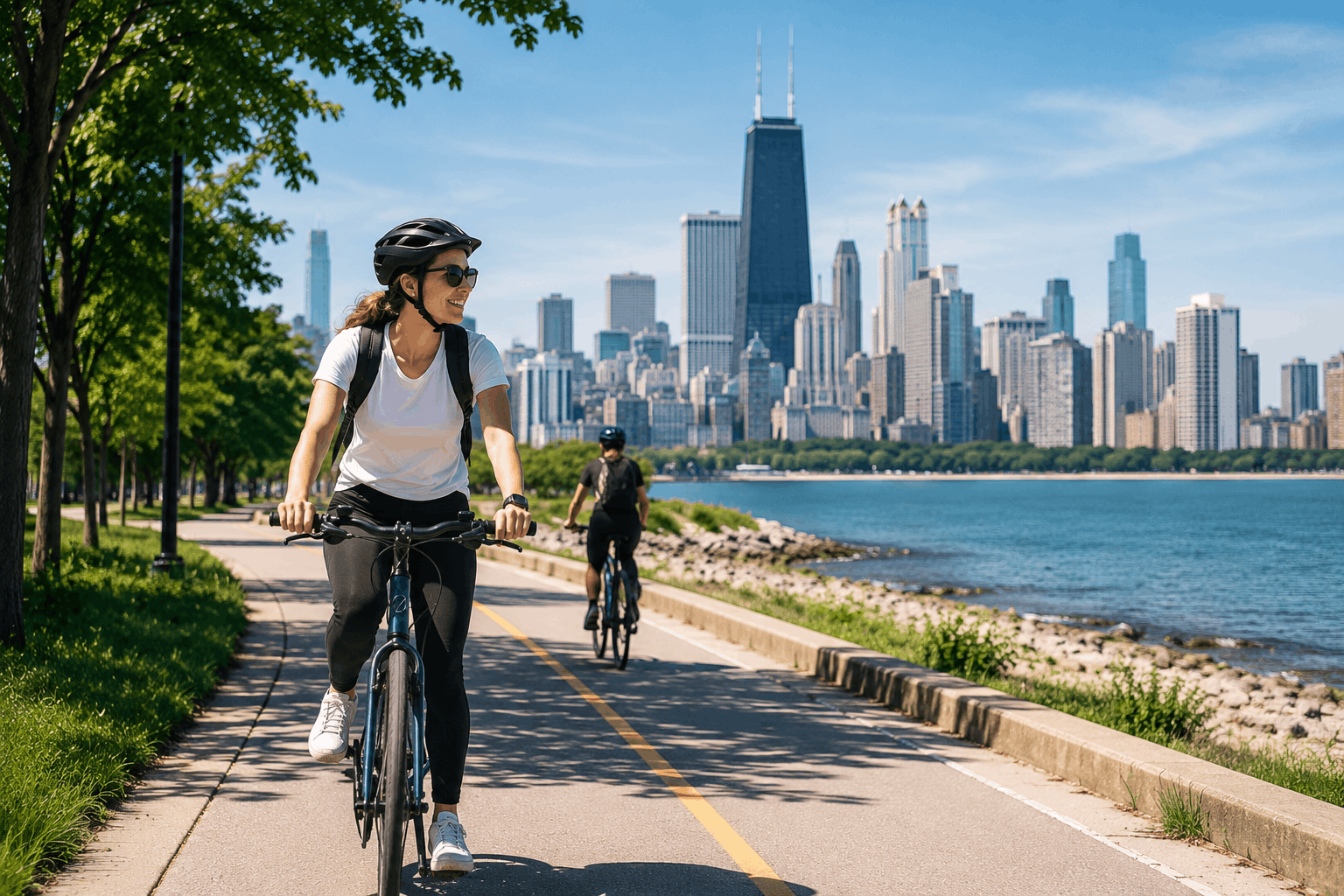
The Lakefront Trail is the crown jewel of Chicago cycling. It runs 18 miles along Lake Michigan, from Ardmore Avenue on the north end to 71st Street on the south.
What makes it one of the safest bike routes in Chicago is its design. Back in 2018, the city completed a separation project that split the path into dedicated bike and pedestrian trails. That separation reduced the collisions that used to occur when walkers and cyclists shared a crowded path. Understanding why Milwaukee Avenue is dangerous for Chicago cyclists can also help riders recognize areas where extra caution may still be needed.
You get flat, paved terrain, no car traffic, and stunning skyline views. It works for nearly every skill level, from families with kids to daily commuters.
A Few Things to Keep in Mind
The trail gets packed in summer. On a sunny day, tens of thousands of people use it, so stay alert at intersections where the bike and pedestrian paths cross. Watch for yield markings and ride at a controlled speed during peak hours.
Protected Bike Lanes Worth Knowing
Protected bike lanes in Chicago are one of the biggest reasons more people feel comfortable riding here, and the network keeps expanding year over year.
Protected bike lanes, sometimes called cycle tracks, use physical barriers like bollards or parked cars to keep you separated from vehicles. Chicago now has nearly 70 miles of them, and the network keeps growing. These barriers can reduce certain collision risks, but understanding why underride crashes are so catastrophic highlights why cyclists must remain cautious around large trucks even when dedicated infrastructure is available.
Milwaukee Avenue is a standout. The stretch between Kinzie Street and Chicago Avenue was recently rebuilt with concrete protected lanes, redesigned intersections, and bus boarding islands. It is one of the busiest bike corridors in the city and is now far safer than it once was. Even on improved routes, using must-have gear for safe city cycling can help riders stay prepared and protected.
On the North Side, you will find protected stretches on Clark Street near Edgewater and Devon, along with sections of Belmont Avenue, Broadway, and Grand Avenue. These give you real separation on otherwise busy roads.
Neighborhood Greenways for Calmer Rides
If protected lanes feel too busy, neighborhood greenways are a great alternative. These are quieter residential streets redesigned for cyclists of all ages.
They often include speed humps, a 20 mph speed limit, raised crosswalks, and curb extensions to slow drivers. Chicago added 22 miles of these greenways in a single recent year (CDOT), creating family-friendly routes that steer you away from arterial traffic.
For casual riders and parents teaching their kids to bike, greenways are among the most comfortable streets in the city. However, cyclists should still understand how truck blind spots endanger cyclists, especially when sharing roads or intersections with large commercial vehicles.
Scenic Off-Street Trails Away From Traffic
Beyond the lakefront, Chicago has several off-street trails that keep you completely separated from cars. These are ideal when you want a longer, calmer ride.
The 606, also called the Bloomingdale Trail, is a 2.7-mile elevated path built on a former rail line. It runs through neighborhoods like Logan Square and Wicker Park with no cars in sight.
The North Branch Trail stretches about 20 miles along the North Branch of the Chicago River, mixing paved and unpaved sections. On the South Side, the Major Taylor Trail offers 8.1 miles combining off-street stretches with quiet greenways. These routes can provide safer options for cyclists, while riders should still remain cautious about bike accidents in Naperville and other nearby communities.
Bike-Friendly Neighborhoods to Explore
Some Chicago neighborhoods make cycling easier. Hyde Park stands out with barrier-protected lanes, clearly signed routes, and shared-use streets designed for safe coexistence between bikes and cars. Understanding cyclist rights in Chicago bike lanes can help riders navigate these spaces more confidently.
Wicker Park and Bucktown offer well-connected lanes along Division Street and Milwaukee Avenue, making short trips and commutes more manageable. These areas reward riders who want low-stress bike routes woven into everyday life, while also highlighting the importance of preventing cyclist and driver collisions.
If you want to test a few of these routes before committing to your own bike, Divvy’s bike-share stations make it easy to pick up a bike near the Lakefront Trail, Hyde Park, or Wicker Park and drop it off elsewhere in the network. It is a low-commitment way to explore some of the safest places to bike in Chicago before deciding which neighborhood or route fits your riding style best. As with any bike, though, bike-share riders can still be involved in serious collisions, so the same safety habits apply.
Choosing to ride and live near strong cycling infrastructure pays off in safety and convenience.
Safety Still Matters on Every Route
Even the safest places to bike in Chicago carry some risk because cars and bikes share the city. Use front and rear lights, wear bright or reflective clothing, and stay predictable at intersections. Following road rage safety tips for cyclists can also help riders respond more safely when confronted by aggressive drivers.
Watch for opening car doors near parked vehicles, a common cause of crashes known as dooring. Signal your turns, obey traffic signals, and assume drivers may not always see you. Knowing how Chicago police handle bicycle crashes can also help you understand what to expect if a collision occurs.
No amount of caution fully removes risk, though. Negligent drivers, poor road conditions, and unsafe intersections still injure careful cyclists every year.
When a Safe Ride Goes Wrong
You can do everything right and still get hurt because of someone else’s carelessness. A driver running a red light or drifting into a bike lane can change your life in seconds. Staying prepared with how to bike safely in Chicago winters can also help cyclists handle challenging road conditions and reduce avoidable risks.
If that happens, you deserve someone who understands bicycle accident claims in Chicago and fights for injured cyclists. Medical bills, lost wages, and recovery time add up fast, and you should not carry that burden alone. This is especially true after a left hook bicycle accident, which can result in serious injuries when a turning vehicle crosses a cyclist’s path.
That is where dedicated legal advocacy makes a real difference for injured cyclists across the city.
FAQ
What is the safest bike trail in Chicago?
The Lakefront Trail is widely considered the safest, thanks to its dedicated bike path separated from both pedestrians and car traffic along Lake Michigan.
Are protected bike lanes safer than regular bike lanes?
Yes. Protected bike lanes use physical barriers to separate cyclists from vehicles, reducing crash risk far more than painted lanes alongside moving traffic.
Which Chicago neighborhoods are best for cycling?
Hyde Park, Wicker Park, and Bucktown offer strong cycling infrastructure, including protected lanes and well-connected routes, making commuting and casual rides much easier.
What should I do after a bicycle accident in Chicago?
Seek medical care immediately, document the scene, gather witness details, and consult a bicycle accident attorney to protect your right to fair compensation.
Are neighborhood greenways good for beginners?
Absolutely. Greenways feature low speed limits, speed humps, and quiet residential streets, making them ideal for new riders, families, and anyone wanting a relaxed route.
Is Chicago a bike-friendly city?
Yes. Chicago has over 500 miles of bikeways, and roughly 42% of that network is considered low-stress, giving cyclists a growing number of routes that stay separated from heavy traffic.
How can I help prevent bicycle accidents while biking in Chicago?
Use front and rear lights, wear bright or reflective clothing, stay predictable at intersections, and watch for opening car doors near parked vehicles. These habits, combined with choosing routes with real separation from traffic, go a long way toward reducing your risk.
Ride Safe, and Know We Have Your Back
Chicago continues to expand its network of safest places to bike, but the road is never fully predictable. If a negligent driver leaves you injured, you should not have to face the recovery and the paperwork alone. Injuries such as facial injuries from a bicycle accident can make that recovery even more challenging.
Injured cyclists across Chicago deserve real advocacy, and that is exactly what I provide. I work on a contingency-fee basis, which means you pay nothing unless we recover money for you. Reach out today for a free, no-obligation consultation, and let me put my experience to work protecting your rights so you can focus on healing.
 Legally Reviewed By
Attorney Jonathan Rosenfeld
Reviewed by Attorney Jonathan Rosenfeld The material on this page has been legally reviewed by Attorney Jonathan Rosenfeld of Rosenfeld Injury Lawyers LLC. Mr. Rosenfeld and his team have experience representing injured cyclists in bicycle accident cases in Chicago. With a focus on personal injury law, they help bicycle accident victims understand their legal options and pursue compensation for medical expenses, lost wages, and other damages resulting from their injuries.
Visit Us