Chicago Bicycle
Accident Lawyer
Accident Lawyer
Injured in a Bicycle Accident? We Can Help.



A Chicago bicyclist hit by a car that failed to stop can suffer serious injuries, leaving them with medical expenses, lost income, and property damage. If you were injured in this type of crash, a Chicago failure to stop bike accident lawyer can help you understand your legal options and pursue a claim. Our Chicago bicycle accident attorney team has a strong track record of recovering millions in bicycle crash settlements, including:
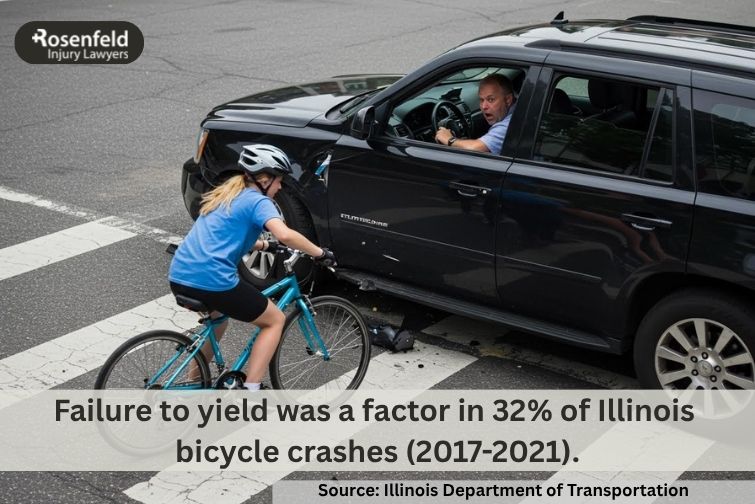
Failure to stop bike accidents often occurs when drivers disregard traffic rules, putting injured cyclists at risk. Common scenarios include:
“Failure to stop” can describe a few different situations, and the difference matters for your claim.
Each situation can support a personal injury claim. If the driver who hit you drove away, see our page on hit and run bicycle accidents for how those claims work.
Failure to stop bike accidents can occur at Chicago intersections, where cyclists and motorists must navigate traffic signals, stop signs, and right-of-way rules. Chicago Department of Transportation bicycle crash data from 2005-2010 found that about 55% of bicycle collisions occurred at intersections, and motorist failure to yield contributed to about 40% of bicycle crashes during that period.
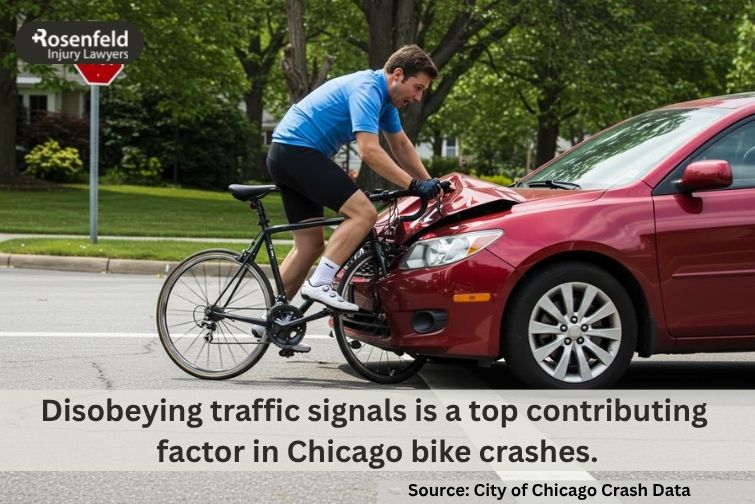
Illinois and Chicago have strict traffic laws requiring all drivers to obey traffic signals and stop signs to protect injured cyclists and pedestrians.
When drivers ignore traffic signals and stop signs, injured cyclists often suffer serious injuries due to the impact of a car or the pavement. Common injuries include:
Failing to stop at a red light or stop sign may violate traffic laws and can support a finding of negligence. When drivers disregard traffic signals, stop signs, or right-of-way rules, they may be held responsible for a bicycle accident and resulting damages, depending on the facts of the case.
Evidence used to establish liability includes:
Taking the proper steps after a bicycle accident can help protect your health and legal rights:
Injured cyclists may be eligible for compensation covering both economic and non-economic damages.
In Illinois, injured cyclists generally have two years from the date of the bicycle accident to file a personal injury claim (§ 735 ILCS 5/13-202). Missing this deadline can prevent you from recovering compensation. Consulting an experienced personal injury attorney as soon as possible can help protect your rights and ensure your case is filed on time.
Claims against a city or other local government body generally have a shorter one-year deadline under 745 ILCS 10/8-101.
Hiring an experienced personal injury attorney can significantly impact your bicycle accident case. Proving driver negligence in failure-to-stop bike accidents requires strong evidence, such as traffic signal data, witness statements, and accident reconstruction.
Insurance companies often try to minimize payouts, making legal representation essential when negotiating for fair compensation. A lawyer ensures you receive the full amount for medical expenses, lost wages, and pain and suffering.
Throughout the legal process, an attorney protects your rights, handles paperwork, and fights to hold the negligent driver accountable for their traffic violations.
If you or a loved one has been injured in a bike accident caused by a failure to stop, a Chicago failure to stop bike accident lawyer can help you understand your legal options. We understand the challenges injured cyclists face and are committed to securing the compensation they deserve.
We work on a contingency fee basis, meaning you pay nothing unless we win your case. Contact us for a free consultation. Let an experienced personal injury attorney handle the legal process while you focus on recovery.
Failure to stop refers to a driver disregarding a traffic signal, stop sign, or right-of-way rule, resulting in a collision. In bicycle accident cases, this behavior may constitute negligence and can support a claim for resulting injuries and damages, depending on the circumstances.amages.
In a bicycle accident involving a driver running a stop sign, the driver is typically at fault because it is a clear traffic violation and act of negligence. However, fault depends on the circumstances of the crash and any evidence concerning shared responsibility.
Yes. If a driver’s failure to stop causes a crash and you suffer injuries, you may be able to pursue a personal injury claim. Illinois law generally gives you two years from the accident date to file a personal injury claim, although exceptions can apply. Acting quickly can help preserve evidence and protect your legal rights.
Key evidence includes police reports, traffic camera footage, eyewitness statements, and accident reconstruction analysis. In an intersection collision, skid marks, signal timing data, and vehicle damage patterns can also help establish that the driver failed to yield or stop.
Chicago bicycle crash data based on 2005-2010 crashes found that approximately 55% of bicycle collisions occurred at intersections. The same data indicated that motorist failure to yield contributed to about 40% of bicycle crashes during that period.
Common injuries include traumatic brain injuries, spinal damage, broken bones, internal bleeding, and road rash. Road rash in particular can cause significant tissue damage and scarring, often requiring extended medical treatment beyond what victims initially expect.
Illinois follows a modified comparative fault rule, meaning you can still recover compensation as long as you are not more than 50% at fault (735 ILCS 5/2-1116). Your insurance settlement or court award would be reduced by your percentage of fault, but you are not automatically barred from recovery.
The driver is generally at fault when a failure to yield causes the crash, because Illinois law requires drivers to yield in situations covered by stop signs, traffic signals, and left-turn rules. Fault can still be shared, and the cyclist’s percentage of fault reduces any damages.
Leaving the scene of an injury crash is a separate violation of Illinois law. You may still have a claim, including through your own insurance in some cases. Report the crash to police right away and speak with a lawyer as soon as you can. See our page on hit-and-run bicycle accidents for details. You may also want to review your options involving your own insurance.
 Legally Reviewed By
Attorney Jonathan Rosenfeld
Reviewed by Attorney Jonathan Rosenfeld The material on this page has been legally reviewed by Attorney Jonathan Rosenfeld of Rosenfeld Injury Lawyers LLC. Mr. Rosenfeld and his team have experience representing injured cyclists in bicycle accident cases in Chicago. With a focus on personal injury law, they help bicycle accident victims understand their legal options and pursue compensation for medical expenses, lost wages, and other damages resulting from their injuries.