- Free Consultation: 312-646-3708 Tap Here To Call Us




How Video Footage Can Help Identify a Hit-and-Run Driver


A hit-and-run driver feels like they’ve vanished, but in a city, almost nothing happens off-camera anymore. Traffic cameras watch the intersections, doorbell cams watch the sidewalks, storefronts watch the curb, and dashcams in passing cars catch whatever rolls by.
On a typical block, a fleeing driver passes through several lenses in a matter of seconds without ever realizing it. So the question after a crash usually isn’t whether footage exists. It’s whether anyone finds and saves it before the system records over itself.
That’s why surveillance footage of a bicycle accident is so often the key to identifying the driver who fled, and why the clock starts the moment you’re hit.
Why Video Is So Valuable After a Hit-and-Run
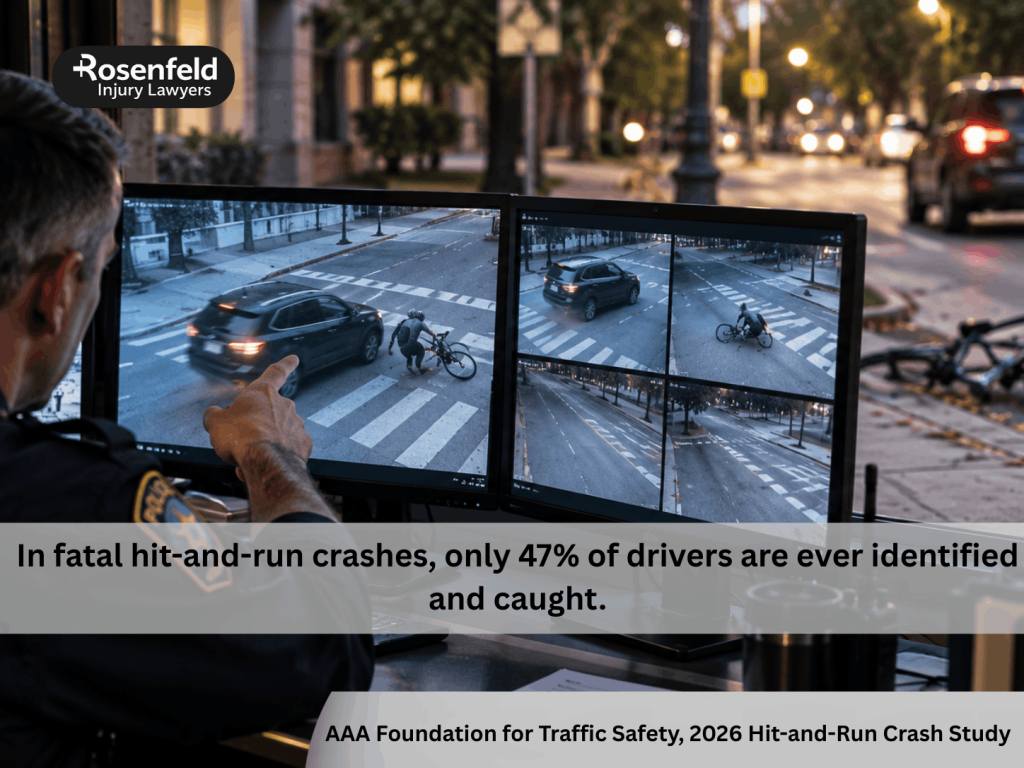
When a driver flees, they leave very little behind. There’s no exchange of information, often no time to catch a plate, and memories blur within minutes. Video fills that gap. A single clear clip can capture the vehicle, its plate, the direction it drove, and the exact time. That turns a frustrating dead end into a solid lead.
That’s what makes surveillance footage of a bicycle accident so powerful. It’s objective, it doesn’t forget, and it can place a specific car at the scene at the moment of the crash. For police and your attorney, that’s often the thread that unravels the whole case.
Where the Footage Usually Comes From
Most people are surprised by how many cameras cover an ordinary city street. After a crash, footage can come from several sources:
- Traffic and red-light cameras at major intersections.
- Business security cameras on storefronts, gas stations, and parking lots.
- Home doorbell and security cameras, like Ring, on nearby houses.
- Dashcams in other vehicles that happened to be passing.
- Transit and bus cameras on city routes.
Any one of these might have caught the car that hit you, which is why a careful canvass of the area matters.
What Surveillance Footage of a Bicycle Accident Can Prove
Good video does more than show that a crash happened. Depending on the angle and quality, it can establish the vehicle’s make, model, and color and capture a full or partial license plate. It can even show the driver’s actions, running a light, swerving, or speeding away without stopping.
It also locks down the timeline. A timestamp places the vehicle at the scene at a precise moment. That helps police match it to other evidence and counters any later claim that the driver wasn’t there.
The Catch: Footage Disappears Fast
Here’s the hard part. Most security and doorbell systems record over their own footage on a loop, often within a few days. Once that happens, the clip that could have identified the driver is gone for good. Traffic camera and business footage can be just as short-lived.
This is the single biggest reason to act immediately after a hit-and-run. The window to preserve surveillance footage of a bicycle accident can close in under a week, long before many people think to look for it.
How to Find and Preserve It
Speed is everything, and a few steps protect your case.
First, talk to a lawyer as soon as you can. An attorney can move quickly to send preservation letters and subpoenas. These legally require a business or agency to save and hand over its footage before it’s erased. That legal reach is something an individual usually doesn’t have.
In the meantime, if you’re able, note any cameras near the scene, on traffic poles, storefronts, and homes, and tell the police where they are. Asking nearby businesses and residents to hold their footage early can also make the difference between catching the driver and losing the trail.
What If There’s No Usable Footage?
Sometimes the cameras weren’t pointed the right way, or the footage is already gone. That doesn’t mean you’re out of options. Witness accounts, physical evidence, and police work can still identify a driver.
Even if no one is found, the uninsured motorist coverage on your own auto policy can apply when you’re hurt on a bike. It treats a hit-and-run driver as if they were uninsured.
The Bottom Line
A fleeing driver may feel impossible to find. But the right surveillance footage of a bicycle accident often tells the whole story: the car, the plate, the moment of impact. The catch is always time: that footage can vanish in days. Report the crash, note the cameras, and get help fast. That gives you the best chance of identifying the driver who left.
Talk to Chicago Bike Injury Lawyers
If you were hurt by a hit-and-run driver, Chicago Bike Injury Lawyers can help. We move fast to track down and preserve video before it disappears, work alongside the police, and pursue every avenue of compensation. The consultation is free, you pay nothing unless we win, and we’re available 24/7. Call 312-646-3708.
Frequently Asked Questions
Can video footage identify a hit-and-run driver?
Yes, often. Clear footage can capture the vehicle’s make, color, and license plate, and sometimes the driver, giving police a strong lead. Even partial details, like a few plate digits, can help narrow down a suspect.
How long is surveillance footage usually kept?
It varies, but many home and business systems record over their footage within a few days. That short window is why it’s important to identify and preserve relevant video as quickly as possible after a crash.
How do I get surveillance footage after a bike accident?
Note nearby cameras and ask businesses or residents to save their footage right away, and report the locations to police. A lawyer can go further, using preservation letters and subpoenas to legally compel a source to hand over its video.
What if there’s no video of my hit-and-run?
You still have options. Witnesses, physical evidence, and police investigation can identify a driver. And if none is found, your own uninsured motorist coverage may apply even though you were on a bike.
Visit Us