- Free Consultation: 312-646-3708 Tap Here To Call Us




When Is a Rideshare Driver Liable for a Bicycle Accident?


Two cyclists can be hit by the same Uber driver in the same spot, yet end up with very different claims. The reason usually isn’t the injury or even who was at fault. It comes down to what the driver was doing in the app at that exact moment. Understanding rideshare driver liability in a bicycle accident means understanding that one detail. It decides which insurance is on the hook and how much is available.
The Short Answer: Fault Still Comes First
Before anything else, a rideshare driver is liable the same way any driver is: through negligence. If the driver owed you a duty of care, broke it, and that caused your injuries, they’re responsible. Running a red light, turning without looking, or opening a door into the bike lane all qualify. The Uber or Lyft label doesn’t change that bar.
So the question of rideshare driver liability in a bicycle accident starts in a familiar place. Was the driver careless, and did that hurt you? If so, they’re at fault. What changes with rideshare isn’t whether they’re liable, but which insurance pays.
What Makes Rideshare Driver Liability in a Bicycle Accident Different: The App Periods
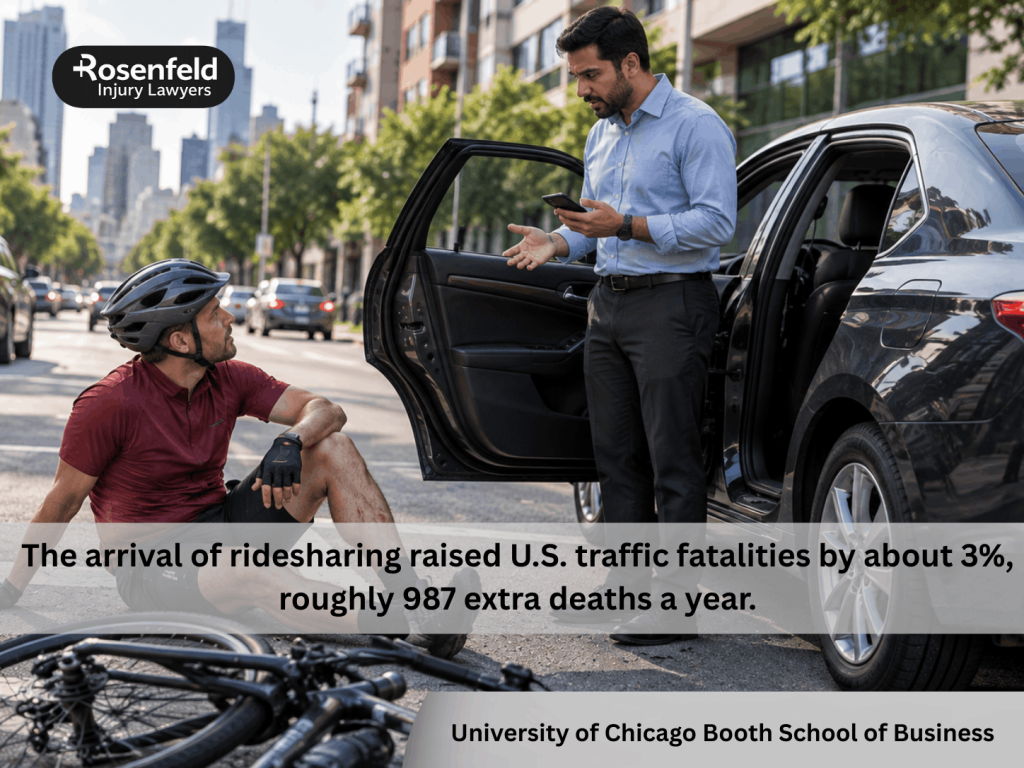
Here’s the wrinkle. Uber and Lyft coverage is split into phases based on what the driver’s app was doing at the moment of the crash. These are usually called periods:
- Period 0 (app off). The driver isn’t working. Only their personal auto insurance applies.
- Period 1 (app on, waiting for a ride). A limited, contingent policy applies, often around $50,000 per person, and only after the driver’s personal insurer denies the claim.
- Period 2 (ride accepted, driving to pick up). The full coverage kicks in.
- Period 3 (passenger in the car). The same full coverage continues until the rider is dropped off.
That single status, off, waiting, en route, or carrying a passenger, can be the difference between a thin policy and a large one.
Why the App Status Decides Which Insurance Pays
The gap between periods is dramatic. In Periods 2 and 3, both Uber and Lyft carry a $1 million third-party liability policy. If their driver hit you while heading to a pickup or carrying a passenger, that policy can cover your injuries when the driver was at fault.
Period 1 is the trap. The driver was technically working, but the only coverage is a much smaller contingent policy that pays out only after their personal insurer refuses. Since most personal auto policies exclude commercial driving, that refusal is almost automatic, which leaves a surprisingly thin layer of protection. Period 0 is simpler: with the app off, it’s just an ordinary crash with an ordinary driver.
Does Uber or Lyft Itself Have to Pay?
This is where people get tripped up. Rideshare drivers are independent contractors, not employees. So Uber and Lyft often argue they aren’t directly responsible for a driver’s mistakes, and they tend to deny that liability.
That doesn’t leave you empty-handed. The insurance described above still applies during the covered periods, even when the company denies direct fault. Your claim usually runs against the applicable policy rather than the corporation itself, which is why pinning down the period matters so much.
Proving Which Period Applied
Because everything turns on app status, proving it is the heart of the case. The good news is that Uber and Lyft record every status change with a timestamp. The logs show when the driver logged on, accepted a ride, picked up, and dropped off. The catch is that they don’t hand that data over voluntarily.
This is the first reason to talk to a lawyer quickly. An attorney can demand those app records through formal legal discovery and subpoenas, and use them to establish the period and the coverage that follows.
If you’re able to be at the scene, a screenshot of the driver’s app status, or a witness who sees it, can help too.
Illinois Rules That Still Apply
Rideshare driver liability in a bicycle accident is still governed by Illinois injury law. Your compensation can be reduced if you share blame, and it’s barred entirely if you’re found more than 50 percent at fault. You also generally have two years from the date of the crash to file. Acting well before that deadline gives a lawyer time to secure the app data before it matters.
Talk to Chicago Bike Injury Lawyers
If an Uber or Lyft driver hit you while you were cycling, Chicago Bike Injury Lawyers can help. We’ll sort out who’s liable and which insurance applies. We move fast to secure the app records that decide your case, deal with the rideshare insurers, and fight for everything you’re owed.
The consultation is free, you pay nothing unless we win, and we’re available 24/7. Call us at 312-646-3708.
Frequently Asked Questions
Is an Uber driver liable if they hit a cyclist?
Yes, if the driver was negligent and that caused the crash. The rideshare driver is at fault the same way any driver would be. What’s different is which insurance policy pays, which depends on the driver’s app status at the time.
Does Uber’s $1 million policy cover me if I were on my bike?
It can. If the driver was en route to a pickup or carrying a passenger, the $1 million liability policy may apply to a cyclist they hit. That coverage doesn’t apply if the app was off.
What if the rideshare driver’s app was off when they hit me?
Then it’s treated like an ordinary crash. Uber and Lyft provide no coverage when the app is off, so you would pursue the driver’s personal auto insurance instead.
How do I prove which period the driver was in?
The driver’s app logs show every status change with a timestamp, but the companies don’t share that data freely. A lawyer can obtain it through discovery and subpoenas, and a screenshot at the scene can help support your claim.
Visit Us