Chicago Bicycle
Accident Lawyer
Accident Lawyer
Injured in a Bicycle Accident? We Can Help.



Ashland Ave is one of Chicago’s longest and busiest north-south corridors, running from around 95th Street north to Irving Park Road. The corridor passes through neighborhoods and areas including Bridgeport, McKinley Park, West Town, Wicker Park, Bucktown, and Lincoln Park. The street is a major route for commuters and public transit, but it poses serious safety concerns for cyclists.
Despite its high bike traffic, Ashland Avenue lacks consistent bike lanes, creating conflict between cyclists and fast-moving vehicles. Crashes involving turning drivers and truckers, driveways, and bus stops are all too common.
If you’ve been hurt in an Ashland Avenue bike accident, our Chicago bicycle accident lawyers can help you seek the compensation you deserve.
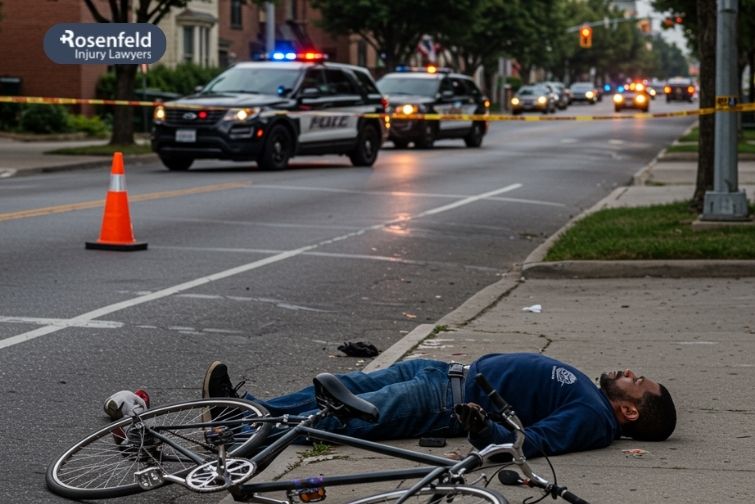
Ashland Avenue can be difficult for cyclists because conditions vary along the corridor, with traffic, turning vehicles, buses, trucks, intersections, and limited bicycle infrastructure creating potential conflicts. In areas without a dedicated bike lane, riders may need to share roadway space with motor vehicles. Wide intersections, commercial driveways, parked vehicles, and frequent turning movements can create additional hazards.
Ashland Avenue bike accidents often result from a combination of high traffic volume, inconsistent infrastructure, and limited protection for cyclists. Conditions can be particularly challenging around busy intersections and commercial areas, including portions of the corridor near Lincoln Park, West Town, and South Ashland Avenue. Cyclists may also encounter conflicts near CTA bus stops, where buses pull toward the curb and other vehicles may pass or turn nearby.
One tragic incident occurred in September 2024. Robert Levin was riding his bike south along Ashland Avenue near Wrightwood Park when a vehicle heading west hit him. He was pronounced dead after the hit-and-run incident.
When a driver turns across a cyclist’s path, a right hook collision can occur. A sideswipe crash happens when a motor vehicle passes too closely and strikes a cyclist traveling in the same direction. Both types of collisions can cause severe injuries, particularly where roadway space is limited.
Cyclists may also use parallel streets or established bikeways when roadway conditions on Ashland are uncomfortable or unsafe. The safest route can depend on the rider’s destination, current road conditions, and available bicycle infrastructure.
Cyclists involved in accidents often suffer serious injuries due to the nature of traffic crashes along this busy corridor.
Common incidents include right hook collisions, where drivers turn across a cyclist’s path, and sideswipe crashes from vehicles passing too closely.
Without bike lanes, riders are often forced into traffic, increasing the risk of being hit.
As a result, victims often sustain broken bones, concussions, spinal injuries, and in severe cases, traumatic brain injuries.
These injuries typically require emergency care, extensive recovery, and legal action to seek compensation for medical costs, pain, and lost income. Some are left with permanent disabilities, while others, like Robert Levin, tragically lose their lives.
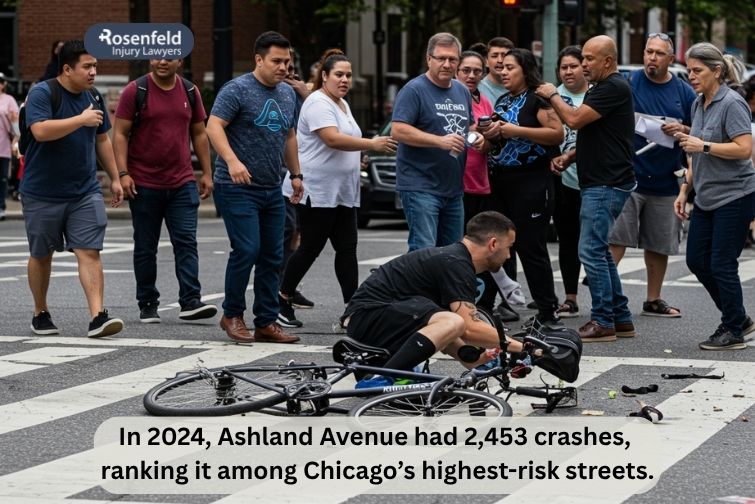
Ashland Avenue is part of the Chicago Bike Network, but despite its significance, the corridor remains dangerous due to inconsistent or missing bike infrastructure. Under Chicago Municipal Code § 9-36-010(c), drivers must maintain at least three feet of space when passing a cyclist. Violating this rule is not uncommon on Ashland, where tight lanes and turning traffic create daily hazards.
The Chicago Department of Transportation (CDOT) has proposed safety upgrades along portions of South Ashland Avenue, including improved pavement markings and signal timing changes for pedestrians and cyclists. Before publication, verify the current status and year of the specific CDOT plan linked on the page. Do not describe proposed work as completed, funded, or scheduled unless the current CDOT source confirms that status.
However, Ashland currently lacks protected bike lanes for much of its length. Enforcement of bike lane violations and right-of-way laws remains a key issue, especially in areas with heavy truck and bus traffic. Cyclists on Ashland continue to face high exposure to vehicle collisions, underlining the need for better infrastructure and legal protections.
Determining fault in Ashland Avenue bike accidents can be complicated due to the area’s dense layout and heavy vehicle activity. Several recurring crash patterns can affect how responsibility is evaluated.
Right-hook collisions can happen when a motorist turns right across a cyclist’s path without yielding. This may occur at intersections or commercial driveways. Evidence such as traffic-camera footage, nearby business video, photographs, witness statements, and the police report can help establish how the collision occurred.
Bus conflicts can also arise when a cyclist travels near a bus stop, and a bus or another vehicle moves across the cyclist’s path. The circumstances of the collision, including the rider’s position, traffic signals, vehicle movements, and available video, can help determine fault.
Truck turning conflicts may be especially serious because trucks have larger blind spots and require more space to complete turns. Evidence from the crash scene, vehicle damage, surveillance footage, witnesses, and the police report may help establish whether the truck driver failed to yield or otherwise caused the collision.
Dooring crashes can occur where street parking is permitted when a driver or passenger opens a vehicle door into a cyclist’s path. The location of the parked vehicle, the bicycle’s position, photographs, witnesses, and video footage may help establish what happened.
Responsibility may fall on the driver, another responsible party, or in some circumstances a public entity or property owner, depending on the facts and applicable law. A thorough review of the police report, witness accounts, and video footage is often necessary to prove liability and pursue fair compensation.
If you’re involved in a bicycle crash on Ashland Avenue, taking the proper steps can help protect both your health and your legal rights:
Call 911 immediately – Report the crash and wait for Chicago Police to respond. Make sure a crash report is filed and request a copy. If appropriate, ask how to obtain the report and follow the applicable reporting process.
Seek medical attention – Even if injuries seem minor, go to the nearest emergency room, such as Rush University Medical Center or St. Mary’s Hospital, to be evaluated and documented.
Document the scene – Use your phone to take photos of the crash location, vehicles involved, your bicycle, injuries, and any bike lane conditions or obstructions.
Get witness contact info – Names and phone numbers of anyone who saw the accident can help support your claim later.
Don’t speak to insurers alone – Before discussing the crash with any insurance company, contact a lawyer who has experience in Ashland Avenue bike accidents.
After a bike crash on Ashland Avenue, having a knowledgeable Chicago bicycle accident lawyer can make all the difference. Your attorney will fully investigate the incident, review the crash report, interview witnesses, and secure video footage from nearby businesses or traffic cameras.
They’ll also handle all communication with insurance companies, working to protect you from lowball offers or attempts to shift blame. Legal counsel ensures essential evidence, like medical records, photos, and documentation of unsafe road conditions, is preserved.
Most importantly, your lawyer will build a case that seeks full compensation for your medical bills, lost wages, and the long-term impact of your injuries.
Bike lane conditions on Ashland Avenue vary by segment, so cyclists should not assume that the entire corridor has a continuous dedicated bicycle lane. Before publishing, verify the current Chicago bikeway map and the specific CDOT plan referenced above to identify which segments have marked or protected bicycle facilities and which do not. Also, confirm the current status of proposed safety improvements against the applicable CDOT source, including the plan year.
For cyclists deciding whether to use Ashland Avenue, current roadway conditions, traffic volume, intersections, bus activity, and available bicycle infrastructure are important considerations. If a parallel bikeway or lower-stress route is available, cyclists may choose it based on their destination and current conditions.
The page should not state that a particular Ashland Avenue bike project is complete, funded, or scheduled unless the current CDOT source expressly confirms it.
Bike lane conditions vary along Ashland Avenue, and the corridor does not have one continuous protected bike lane along its full length. Check the current CDOT bikeway information for the specific segment before describing a particular lane or planned improvement.
Call 911 and report the crash promptly. Preserve any information you have about the vehicle, driver, direction of travel, witnesses, and surrounding video, and review whether uninsured motorist coverage may apply under your own auto insurance policy.
Yes, riding outside a marked bike lane does not automatically prevent a cyclist from recovering compensation. Illinois law permits a bicyclist to move away from the right edge when reasonably necessary to avoid parked or moving vehicles, surface hazards, or substandard-width lanes that make continuing along the edge unsafe.
How to file a police report after a bicycle accident can provide additional guidance on documenting and reporting a crash.
The page currently identifies Rush University Medical Center and St. Mary’s Hospital as nearby treatment options. After a serious crash, getting prompt medical evaluation at the nearest appropriate emergency department is generally more important than choosing a particular facility.
The rider’s injuries and the circumstances of the crash should determine the treatment location and medical advice.
Ashland Avenue is one of several major Chicago corridors where cyclists may encounter vehicle traffic and changing roadway conditions. Learn more about Milwaukee Avenue bike accidents and other Chicago bicycle accident locations for additional corridor-specific information.
If you were hurt in a bike accident on Ashland Avenue, don’t face the aftermath alone. The risks along this busy corridor, from heavy truck traffic to unprotected bike lanes, demand legal help from someone who knows the area.
At Chicago Bike Injury Lawyers, we understand the unique dangers cyclists face and work aggressively to hold negligent drivers accountable. We offer a free consultation to review your case, answer your questions, and help you understand your legal options.
If you need to discuss a bicycle accident claim, call us at (312) 646-3708 or fill out our contact form to speak with a lawyer about your legal options.
Call us at (312) 646-3708 or fill out our contact form to speak with a lawyer who can fight for the compensation you deserve.
 Legally Reviewed By
Attorney Jonathan Rosenfeld
Reviewed by Attorney Jonathan Rosenfeld The material on this page has been legally reviewed by Attorney Jonathan Rosenfeld of Rosenfeld Injury Lawyers LLC. Mr. Rosenfeld and his team have experience representing injured cyclists in bicycle accident cases in Chicago. With a focus on personal injury law, they help bicycle accident victims understand their legal options and pursue compensation for medical expenses, lost wages, and other damages resulting from their injuries.