
Chicago Bicycle
Accident Lawyer
Accident Lawyer
Injured in a Bicycle Accident? We Can Help.



No, you cannot get a DUI on a standard bicycle in Illinois. Pedal-powered bikes are not classified as motor vehicles, so they do not fall under the state’s DUI statute (625 ILCS 5/11-501). For most cyclists, drunk riding is not a DUI offense.
E-bikes are a different matter. Class 2 and Class 3 electric bikes, which can be propelled without pedaling or can reach higher speeds with motor assistance, may qualify as motor vehicles for DUI purposes. If you ride a high-powered e-bike or motorized scooter while impaired, you could face DUI charges in Illinois.
Even without a formal DUI, impaired cycling can still result in traffic citations, public intoxication charges, disorderly conduct, or civil liability if you cause an accident. At Chicago Bike Injury Lawyers, we can help you understand the law and your rights after a bicycle accident. We provide experienced guidance on Chicago bicycle laws and resources and can connect you with a Rockford, Illinois bicycle accident attorney when you need legal guidance.
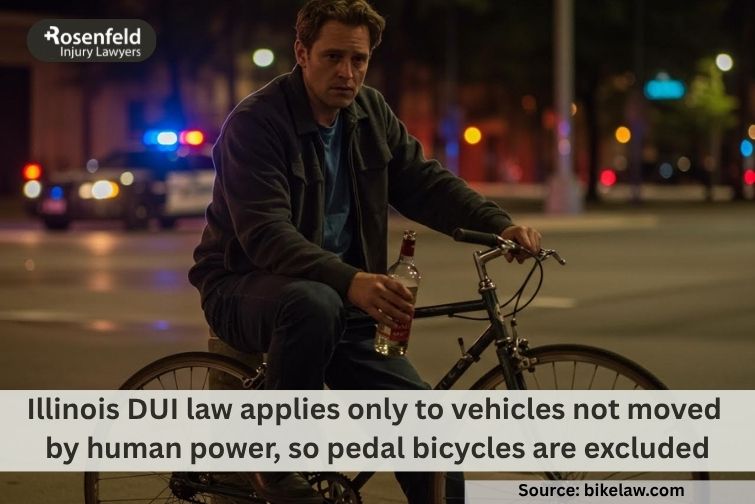
The DUI statute outlines state definitions for motor vehicles and what constitutes a DUI. This law focuses on cars and trucks operated on public roads, so a standard bicycle without a motor is not included. However, cyclists should still exercise caution around situations such as the right-turn squeeze with trucks, which can result in severe collisions.
However, e-bikes and motor-assisted bicycles could qualify for a DUI charge if an impaired rider is operating the vehicle. Eligibility for a DUI will depend on the class and power level of the bike. Those who operate motorcycles, mopeds, or high-powered e-bikes could be subject to criminal charges for riding while intoxicated or under the influence of drugs. Understanding how traffic signals and bicycle accidents can intersect may also be important when determining how a collision occurred. If you are involved in a related crash, an Aurora, Illinois bicycle accident attorney can help review the circumstances.
For example, a low-speed electric scooter may be considered a motor vehicle and could lead to a DUI under state law 625 ILCS 5/11-1518. An intoxicated person can put another’s life in danger if they cause an accident.
Under Illinois statute 625 ILCS 5/1-140.10, e-bikes can be organized into three classes depending on their capabilities and power levels. A class 1 e-bike has a motor that only assists while the rider is pedaling up to 20 mph. Riding while impaired on this type of e-bike cannot result in DUI charges. Understanding Chicago bike lane laws can also help cyclists understand the rules that apply when riding on city streets.
Class 3 e-bikes, which can reach 28 mph with motor assistance, are most likely to fall under DUI jurisdiction. Class 2 e-bikes, which can be propelled without pedaling up to 20 mph, may also qualify, though their status is less definitively settled than Class 3. If you are unsure whether your e-bike is subject to DUI laws, consult an attorney before assuming you are exempt. If you are unsure which e-bike accidents could lead to DUI concerns due to alcohol or drugs, our attorneys can provide clarification. Serious crashes may also result in nerve damage from a bicycle accident, regardless of whether DUI charges are ultimately involved.
Even though alcohol and drugs are common causes of bicycle accidents, they usually do not result in DUIs for the riders. However, you could be subject to other legal penalties and consequences, including violations related to Illinois bicycle helmet laws.
Cook County’s municipal codes apply to unincorporated areas of the county. Cities such as Oak Park, Schaumburg, Skokie, and Cicero enforce their own city ordinances governing bicycle operation.
In Kane County, municipal codes apply only to unincorporated areas. Incorporated cities like Aurora and Elgin follow their own municipal codes.
DuPage County ordinances also regulate unincorporated areas, while cities such as Naperville and Wheaton enforce their own municipal laws.
Will County has established municipal codes for bikers in unincorporated regions. Cities, including Joliet and Bolingbrook, follow their own codes.
Kendall County has its own code of ordinances that apply mainly to unincorporated areas, though parts of Yorkville are subject to its regulations.
Winnebago County municipal codes govern unincorporated areas, while the city of Rockford operates under its own municipal code.
The Sangamon County code of ordinances is separate from cities’ own municipal ordinances, such as Springfield.
Municipal codes in the county of Peoria apply to unincorporated areas, while the city of Peoria maintains its own code.
Lake County is home to numerous unincorporated regions that follow the county ordinances. Cities such as Waukegan follow their own municipal codes.
The local codes in Champaign County apply to unincorporated areas, while the city of Champaign is governed by its own municipal code.
An important question you might face after a collision is “How does comparative fault impact bicycle accident claims?” If the intoxicated human was only partially at fault, can they be held liable for the entirety of the accident? This can become especially complicated after a crosswalk bicycle accident, where the actions of both the cyclist and other road users may be examined. Speaking with a Springfield, Illinois bicycle accident attorney can help you understand how fault may affect your claim.
Fortunately, the Illinois comparative negligence law (735 ILCS 5/2-1116) provides some answers. If various parties are at fault for violating traffic laws or drunk driving, fault can be shared. The percentage of fault will help determine your eligibility for compensation. You must be no more than 50% at fault for the consequences of an accident to be eligible for legal damages.
Overcoming a strong defense can be challenging for personal injury claims, but our attorneys can help bicycle riders gather evidence. For riders involved in a crash in the area, a Waukegan bicycle accident lawyer can also help assess the available evidence and potential claim.
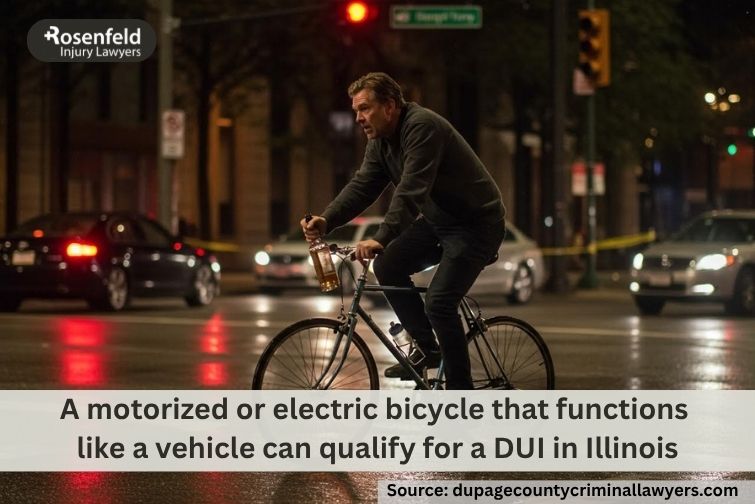
Bicyclists must obey the same traffic laws as other drivers, but for DUI purposes, the standards are slightly different. While most cyclists cannot be charged with a DUI, they could still receive traffic tickets, disorderly conduct charges, or other criminal offenses for riding while drunk. If you are injured in a bicycle crash involving an impaired rider, a Naperville bicycle accident lawyer can help you understand your legal options. Understanding distracted driving and cyclist safety in Chicago can also help explain how driver behavior contributes to bicycle crashes.
The best way to avoid any traffic offense if you are drunk is to use public transit vehicles or rideshares, or consider walking instead. It is better to avoid a misdemeanor or felony on your biking or driving record. Riders should also understand the rules regarding wearing headphones while biking in Illinois, as staying alert is essential for safe cycling. In cases involving rideshare vehicles, knowing who’s at fault when a rideshare driver hits a cyclist can help determine available legal options.
At Chicago Bike Injury Lawyers, we believe in protecting the rights of injured cyclists and pedestrians. Our goal is to educate the public about DWIs, DUIs, and other charges related to alcohol and drugs to make our roads safer. If you have been injured in this type of collision, we have the experience to establish liability and fight for every dollar you deserve from the at-fault person. Understanding impaired cycling risks at intersections can also help riders recognize situations where crashes are more likely to occur.
Contact us today at 312-646-3708 for a free consultation about your drunk driving or drunk riding accident.
No. Standard pedal bicycles are not classified as motor vehicles under Illinois DUI law (625 ILCS 5/11-501), so DUI statutes do not apply. A police officer cannot charge you with a DUI for riding a regular bicycle while drunk. However, you can still face other charges, including public intoxication, reckless conduct, or traffic violations.
It depends on the class. Class 1 e-bikes (pedal-assist only, up to 20 mph) are generally exempt from DUI laws. Class 3 e-bikes, which can reach 28 mph, are most likely subject to DUI statutes. Class 2 e-bikes (motor-propelled without pedaling, up to 20 mph) fall in a gray area. If you ride a high-powered e-bike and are stopped while impaired, you could face charges.
Yes. Even without a DUI, impaired cyclists can be cited for reckless conduct (720 ILCS 5/12-5), disorderly conduct, public intoxication under local ordinances, or traffic violations like running red lights. If impaired riding causes an accident, civil liability is also possible regardless of whether criminal charges are filed.
Yes, in some circumstances. If your impaired cycling creates a danger to others, officers can charge you with reckless conduct or disorderly conduct, both of which can result in arrest. Public intoxication ordinances in cities like Chicago also allow police to detain visibly intoxicated individuals in public spaces, including cyclists. Consulting an Elgin, Illinois bicycle accident attorney can help you understand how these situations may impact your legal rights.
Even without a DUI conviction, a drunk cyclist who causes an accident can be held civilly liable for injuries and property damage under Illinois comparative negligence law (735 ILCS 5/2-1116). The cyclist’s impairment may increase their percentage of fault, reducing or eliminating their own right to recover damages if they were also injured.
Technically yes for a standard pedal bike, since no specific “biking under the influence” law exists. But legal does not mean consequence-free: disorderly conduct, reckless conduct, public intoxication, or civil liability can all still apply. Most importantly, impaired cycling is dangerous to yourself and others regardless of whether it results in criminal charges. Understanding what is a truck underride accident can also help illustrate why cyclists face serious risks when involved in collisions with large commercial vehicles.
 Legally Reviewed By
Attorney Jonathan Rosenfeld
Reviewed by Attorney Jonathan Rosenfeld The material on this page has been legally reviewed by Attorney Jonathan Rosenfeld of Rosenfeld Injury Lawyers LLC. Mr. Rosenfeld and his team have experience representing injured cyclists in bicycle accident cases in Chicago. With a focus on personal injury law, they help bicycle accident victims understand their legal options and pursue compensation for medical expenses, lost wages, and other damages resulting from their injuries.