
Chicago Bicycle
Accident Lawyer
Accident Lawyer
Injured in a Bicycle Accident? We Can Help.



Dennis’ Law is a 2017 amendment to the Illinois Vehicle Code that gives people riding bicycles on highways the same rights, including applicable right-of-way rights, and duties that apply to drivers of vehicles. The law was prompted by the 2015 death of Dennis Jurs and a court ruling involving the right of bicyclists to the right of way.
In 2015, Dennis Jurs was riding his bicycle in Hampshire Township, Illinois. He was struck and killed by an SUV at an intersection, and the driver was ticketed for failing to yield the right of way.
However, the driver challenged the citation, and a Kane County judge ruled that the traffic ticket was invalid, stating that bikes are not vehicles and that the right-of-way rules did not apply.
The backlash from the family and community eventually resulted in a new statute called Dennis’ Law. Governor Bruce Rauner signed the statute into law, and it went into effect on January 1, 2017.
A bicycle is not classified as a “vehicle” under 625 ILCS 5/1-217 because the statutory definition excludes devices moved by human power. Instead, 625 ILCS 5/11-1502 provides that every person riding a bicycle on a highway shall be granted all of the rights, including applicable right-of-way rights under Article IX, and shall be subject to the duties applicable to a driver of a vehicle. In Chicago, Chicago Municipal Code Chapter 9-52 also addresses bicyclists’ rights and duties as road users. Now, a driver must yield the right of way to a bicyclist when the cyclist is legally entitled to it.
If you are hit while riding a bicycle in the Windy City and get injured, our Chicago bike accident law firm can walk you through the legal claims process.

This law was passed by both the Illinois House of Representatives and the Illinois State Senate. Public Act 99-0785 amended 625 ILCS 5/11-1502, and the amendment took effect on January 1, 2017. Before the amendment, the statute stated that traffic laws applied to people riding bicycles, subject to the exceptions in Article XV and provisions that could not apply by their nature. The amendment expressly clarified that a person riding a bicycle on a highway is granted all rights, including rights under Article IX, and is subject to the duties applicable to the driver of a vehicle. Read Public Act 99-0785.
Dennis Jurs was a 68-year-old cyclist from Hampshire who was killed in a May 2015 collision with a motor vehicle after a failure-to-yield citation was issued to the driver. After a Kane County judge dismissed the citation, Jurs’ family and supporters pushed for greater clarity in Illinois bicycle right-of-way law. State Representative Anna Moeller sponsored the legislation that became Public Act 99-0785. A 2026 Daily Herald report on Dennis Jurs and the law.
For additional information about Illinois bicycle laws and cyclist resources, see our Illinois bicycle laws and cyclist resources page.
The story of Dennis Jurs has changed how Illinois law protects bicyclists. Since they now have the same rights and responsibilities as drivers, they have an equal share of the road in right-of-way scenarios. Right-of-way laws are essential for determining who is at fault in an accident, especially when the collision results in serious injuries.
Illinois bicycle laws also address how drivers must safely pass cyclists on the road. Learn more about the Illinois three-foot passing law and the requirements that may apply when a motorist passes a bicyclist.
For example, say you arrive at a four-way stop in Chicago before another vehicle coming from a different direction. You have the right to go through that intersection just as a vehicle would before the second car.
If you get hit and suffer spinal cord injuries, the other driver would likely be liable for those injuries because they failed to follow the right-of-way rules for bikers and drivers.
In a real bicycle accident claim, a driver’s failure to yield may support a negligence claim when the facts show the driver violated a right-of-way rule. A cyclist’s right of way is determined under the same applicable traffic rules that govern other road users. However, Illinois modified comparative negligence still applies, so a cyclist’s own fault may reduce recovery and can bar recovery when the cyclist is more than 50% at fault.
You can also learn more about failure to stop and failure to yield bicycle accidents and the Illinois three-foot passing law.
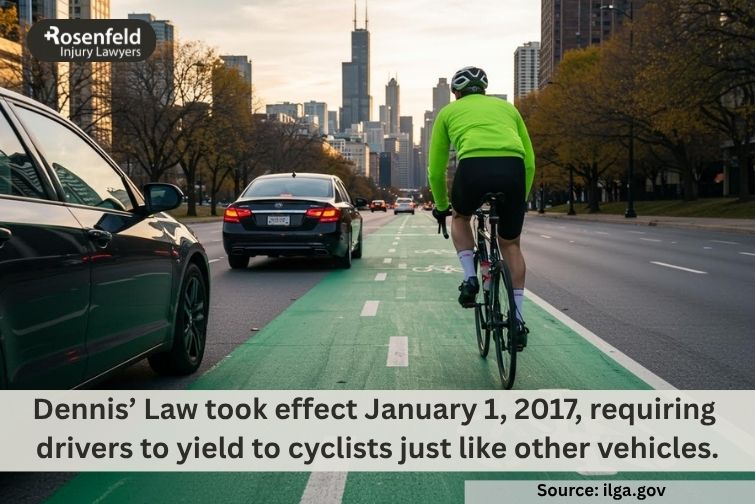
Thanks to this newer Illinois law, bikers in Chicago have more agency to protect their rights if collisions occur. If you are injured in an accident because of negligent drivers, here are the steps you should follow to prioritize your health and legal options.
If you are injured in a bicycle accident and plan to file a legal claim for damages, a lawyer can make a huge difference in your case. First, they will know how to investigate the incident and gather compelling evidence. Your lawyer will also understand the Illinois bicycle right-of-way rules and how they may apply to your situation.
An experienced Chicago bike accident attorney will assess all legal damages, which may include lost income, medical expenses, emotional distress, pain and suffering, and even loss of quality of life. When negotiations with the insurance company begin, the attorney will know how to maximize compensation. Finally, if a civil trial is necessary, this legal professional will represent you.
The amendment took effect on January 1, 2017, as Public Act 99-0785. It amended Section 11-1502 of the Illinois Vehicle Code to clarify the rights and duties of people riding bicycles on highways.
No. A bicycle is not a “vehicle” under 625 ILCS 5/1-217 because the definition excludes devices moved by human power. However, 625 ILCS 5/11-1502 grants people riding bicycles on highways the rights, including applicable right-of-way rights, and duties that apply to drivers of vehicles.
Yes. The amendment applies statewide because it amended the Illinois Vehicle Code. Chicago also has its own bicycle-related provisions in Municipal Code Chapter 9-52.
Yes. Illinois modified comparative negligence under 735 ILCS 5/2-1116 still applies. A cyclist’s recovery may be reduced based on the cyclist’s share of fault and is barred when the cyclist’s contributory fault is more than 50%. Learn more about modified comparative negligence in Illinois.
Whether you are hit while using one of Chicago’s many bike lanes or while lawfully passing through an intersection, Illinois law provides bicyclists with applicable rights and duties on the road. Our Illinois bike accident law firm can help you hold the at-fault party accountable by seeking compensation for legal damages.
We know what it takes to build a strong case and apply Illinois bicycle right-of-way law to right-of-way accidents. Every new client at our firm gets a free consultation with an experienced lawyer, so contact us to schedule yours today.
If a driver failed to yield to you while you were riding lawfully, that may be the type of right-of-way situation covered by these rules, and you can learn more about your legal options.
 Legally Reviewed By
Attorney Jonathan Rosenfeld
Reviewed by Attorney Jonathan Rosenfeld The material on this page has been legally reviewed by Attorney Jonathan Rosenfeld of Rosenfeld Injury Lawyers LLC. Mr. Rosenfeld and his team have experience representing injured cyclists in bicycle accident cases in Chicago. With a focus on personal injury law, they help bicycle accident victims understand their legal options and pursue compensation for medical expenses, lost wages, and other damages resulting from their injuries.