- Free Consultation: 312-646-3708 Tap Here To Call Us




Why Is a Bicycle Accident Police Report Important for Your Case?


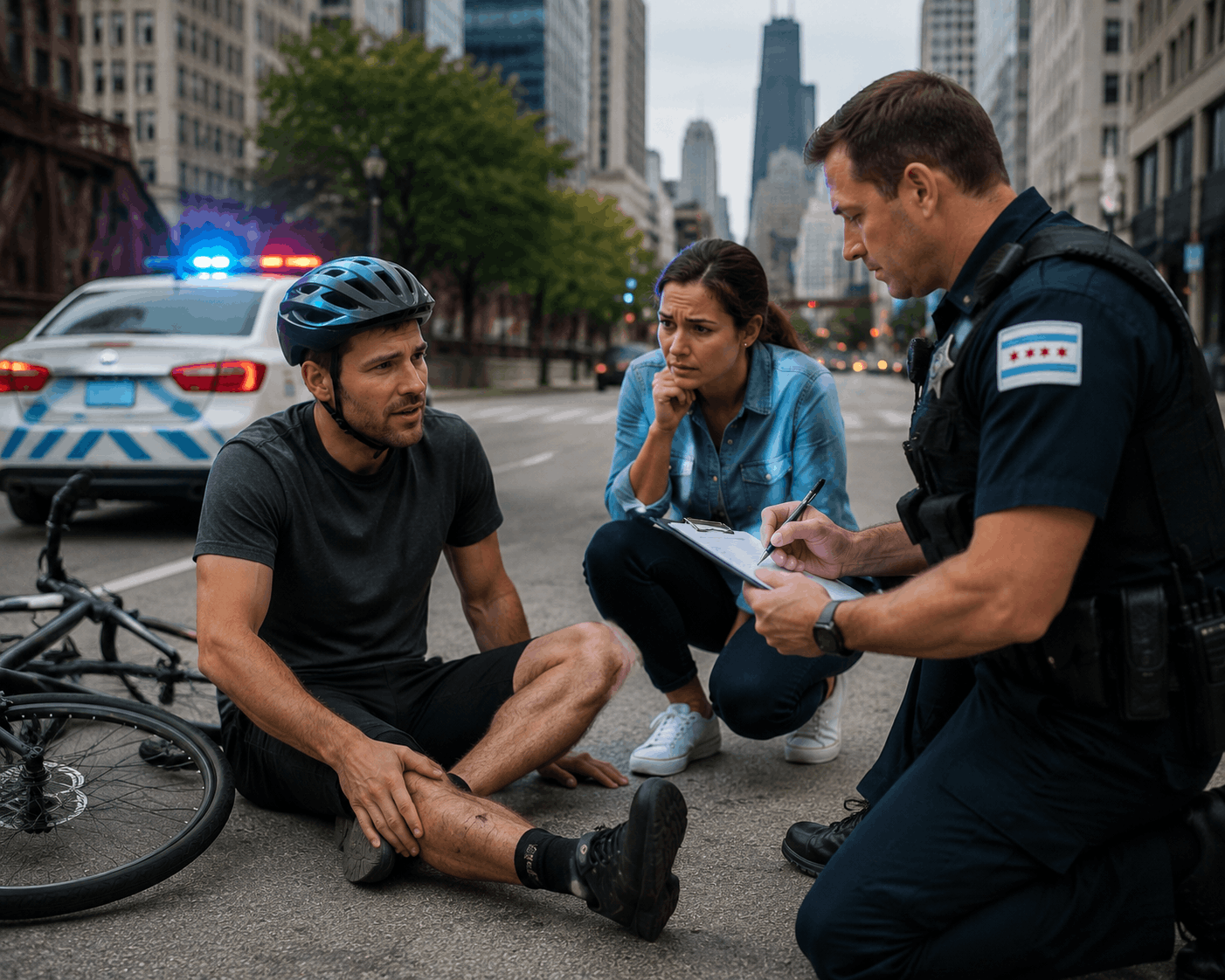
Getting hit while riding your bike in Chicago is frightening. In the moments after a crash, your head is spinning, and the last thing on your mind is paperwork. Yet one document can shape the outcome of your entire claim: the police report.
A bicycle accident police report is often the single most important piece of evidence in a bicycle injury claim. It records what happened, who was involved, and who may be at fault. Without it, your case becomes harder to prove.
This guide explains why this report matters, what it contains, and how to ensure it is filed correctly after your crash.
What Is a Bicycle Accident Police Report?
A police report is an official written record created by the responding officer after a bike crash. It documents the scene, the parties involved, and the officer’s initial assessment of what occurred.
In Illinois, the responding officer typically completes a traffic crash report at the scene or shortly after. This document becomes part of the official record that insurers, attorneys, and courts rely on, especially in cases involving cycling accident orthopedic injuries.
Think of it as a neutral, third-party account of your accident. It carries weight precisely because it comes from an officer rather than from you or the driver who hit you.
What Information Does a Police Report Contain?
A thorough report captures details that prove difficult to recreate later. The most useful items for your personal injury claim include several key facts.
The report usually lists the date, time, and exact location of the accident, along with weather and road conditions. It identifies all parties involved, including the driver, the cyclist, and any witnesses.
It also documents vehicle damage, visible injuries, and the officer’s narrative of how the collision unfolded. Many reports note whether any traffic violation occurred, such as a driver running a red light or failing to yield, which can be critical in severe outcomes like paralysis caused by a bicycle accident.
Finally, the report may include a preliminary opinion on fault. While this opinion is not the final word, insurance adjusters take it seriously.
Why the Police Report Is So Important for Your Claim
It Establishes a Clear Record of Fault
Proving who caused the crash is the heart of any bicycle accident case. The driver’s insurance company will often try to shift blame onto the cyclist to reduce what they pay.
A police report that documents a traffic violation or a clear sequence of events makes it far harder for the insurer to twist the facts. It anchors your version of events in an official document, particularly when dealing with claims involving facial trauma from bicycle accidents.
It Preserves Evidence Before Memories Fade
Human memory is unreliable. Within days, witnesses forget details, and the driver’s story may change to favor their own interests.
The report locks in the facts while they are fresh. This documentation becomes a reliable reference point for your bicycle accident lawyer to build a strong case.
It Strengthens Your Insurance Claim
When you file a bicycle injury claim, the adjuster reviews the police report early in the process. A detailed report that supports your account often leads to a faster, fairer settlement.
Without one, the insurer has more room to dispute your damages and delay payment. The report gives your claim credibility from the start, especially when pursuing pain and suffering damages.
It Identifies Witnesses and Contact Details
Independent witnesses can make or break a case. After a crash, you may be too injured to gather names and numbers yourself.
Officers routinely record witness information in their reports. This gives your attorney people to contact who can confirm what happened in cases tied to known Chicago bike crash hotspots.
How to Get a Police Report After a Bike Crash in Chicago
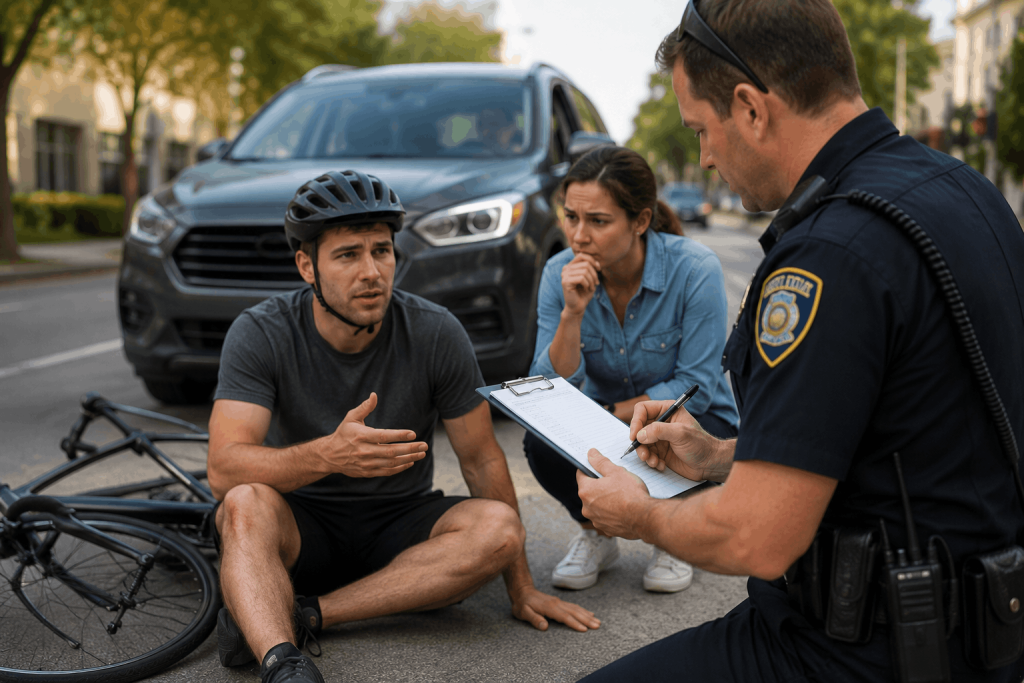
The first step is calling 911 from the scene. Even if injuries seem minor, a police presence ensures an official record gets created.
Once the report is filed, you can request a copy. In Chicago, crash reports are available from the Illinois State Police or the local department that responded, often within 7 to 10 days of the incident.
You will typically need the date of the crash, the location, and the names of those involved to locate your report. Your personal injury attorney can also obtain it on your behalf, which removes one burden from your recovery and ensures compliance with the Illinois bicycle injury claim time limit.
What If No Police Report Was Filed?
Sometimes officers do not respond, or a report never gets completed. This does not automatically end your case, but it does make matters more complex.
In these situations, other evidence becomes essential. Photos of the scene, medical records, witness statements, and any available video footage help fill the gap.
This is exactly where experienced legal help matters most. A skilled bicycle accident lawyer knows how to assemble a compelling case even when the official record is incomplete.
Steps to Take at the Scene to Support Your Report
What you do6 in the minutes after a crash directly affects the strength of your report and your claim. A few simple actions protect your rights.
Call the police and request that an officer respond. Exchange information with the driver, including their name, license, and insurance details.
Take photos of the vehicles, your bicycle, the road, and your injuries. Gather contact details from any witnesses and seek medical attention, even if you feel fine, as some injuries may not appear for hours. These early steps are especially important if you are dealing with steps after insurance denies bike accident claim.
These steps provide the officer with accurate information and create backup evidence to support the official report.
How a Police Report Affects Your Compensation
The stronger your evidence, the stronger your position when negotiating compensation. A clear police report supports claims for medical bills, lost wages, pain, and property damage.
Illinois follows a modified comparative negligence rule. If you are found partly at fault, your recovery can be reduced, and if you are more than 50 percent at fault, you may recover nothing, which is why properly documenting medical records for bicycle accident claims is so important.
Because the report influences how fault is assigned, its accuracy directly affects how much you can recover. This is why reviewing the report for errors is a critical early step in any bicycle accident claim.
Why Working With a Bicycle Accident Lawyer Helps
Insurance companies handle these claims daily and negotiate to protect their bottom lines. Going up against them alone puts you at a disadvantage.
An attorney who focuses on cyclist injury cases understands how to read a police report, spot weaknesses, and gather supporting evidence. They handle the insurer so you can focus on healing.
If the report contains an error or omits key facts, your lawyer knows how to challenge it and supplement the record. That experience often makes the difference between a denied claim and fair compensation.
FAQ
Do I need a police report to file a bicycle injury claim in Chicago?
No, but it strongly helps. A police report provides official documentation of fault and details that make your claim far easier to prove.
How long do I have to get a copy of my crash report?
Crash reports in Chicago are usually available within seven to ten days. You or your attorney can request a copy from the responding department.
What if the police report blames me for the accident?
The officer’s opinion is not final. A bicycle accident lawyer can review the report, gather additional evidence, and challenge inaccurate conclusions about fault.
Should I still call the police if my injuries seem minor?
Yes, always. Some injuries surface hours later, and an official report protects your right to seek compensation if your condition worsens.
Can a lawyer help if no police report was filed?
Absolutely. An experienced attorney can build your case using photos, medical records, witness statements, and other evidence to support your claim.
Conclusion
A police report can be the foundation of a successful bicycle injury claim, but you do not have to navigate the process alone. The decisions you make now affect the compensation you deserve.
If you were injured while cycling, reach out for a free, no-obligation consultation. We work on a contingency-fee basis, which means you pay nothing unless we recover money for you. Let us review your police report, protect your rights, and fight for the recovery you need to move forward.
 Legally Reviewed By
Attorney Jonathan Rosenfeld
Reviewed by Attorney Jonathan Rosenfeld The material on this page has been legally reviewed by Attorney Jonathan Rosenfeld of Rosenfeld Injury Lawyers LLC. Mr. Rosenfeld and his team have experience representing injured cyclists in bicycle accident cases in Chicago. With a focus on personal injury law, they help bicycle accident victims understand their legal options and pursue compensation for medical expenses, lost wages, and other damages resulting from their injuries.
Visit Us