- Free Consultation: 312-646-3708 Tap Here To Call Us




Denied Bicycle Accident Claim: What to Do and the Steps You Should Take Next



You filed your claim, you waited, and the insurance company said no. After a serious crash, a denied bicycle accident claim can feel like a door slamming in your face. The good news is that a denial is rarely the end of your case.
Insurance carriers reject claims every day for reasons that have nothing to do with the strength of your injury. Knowing what to do next protects your right to financial compensation and keeps the at-fault driver accountable.
This guide walks you through why claims get denied, the exact steps to take after a denial, and how an experienced bicycle accident attorney can turn a “no” into a recovery.
If your bicycle accident claim was denied, here’s what to do next:
- Read the denial letter carefully
- Don’t accept the denial as final
- Gather and strengthen your evidence
- Understand Illinois’ comparative negligence rules
- File a formal appeal or demand
- Watch your statute of limitations deadline
- Talk to a bicycle accident lawyer
Why Insurance Companies Deny Bicycle Accident Claims
Most denials come down to a handful of predictable reasons. Understanding the cause behind your claim denial is the first step toward reversing it.
Insurers are businesses, and paying out a personal injury claim cuts into their profit. That motive shapes how they review your case. A denial often reflects their interests rather than the facts of your bicycle accident.
Common reasons a carrier denies a cyclist’s injury claim include:
- Disputed liability, where the insurer argues their driver was not at fault or that you caused the crash
- Comparative negligence, claiming you share blame for riding outside a bike lane or running a signal
- Insufficient evidence, saying your documentation does not prove the injuries or the negligence
- Policy or coverage issues, such as a lapsed policy or a claimed exclusion
- Missed deadlines or paperwork errors during the insurance claim filing process
- Pre-existing condition arguments, where they blame your injuries on something other than the wreck
Knowing which reason applies to you shapes every move that follows.
Step 1: Read the Denial Letter Carefully
Your claim denial letter is more than bad news. It is a roadmap. By law, the insurer must explain why it rejected your claim.
Read it line by line and identify the specific reason cited. A denial based on missing medical records is fixable. A denial based on disputed fault calls for a different strategy entirely.
Note any deadlines mentioned in the letter. Many policies set strict windows for filing an appeal, and missing one can cost you your case.
Who Denied Your Claim? Why It Changes Your Options
Not all denials are the same, and who denied your claim shapes what you can do about it.
If the at-fault driver’s liability insurer denied you, you have no contract with that company, so there is no formal appeal right built into a policy. This is simply a liability dispute, and your remedies are a stronger demand backed by evidence, negotiation, or filing a lawsuit. Understanding what insurance covers you after a bicycle accident can help you see which policy is actually in play.
If your own insurer denied a first-party claim, such as uninsured and underinsured motorist claims or MedPay, you do have a contract, and your policy sets out a dispute or appeal process. Illinois law also allows a remedy under 215 ILCS 5/155 when an insurer’s conduct in handling that claim was unreasonable and vexatious, though that is a narrower standard than simply disagreeing with the outcome.
Step 2: Do Not Accept the Denial as Final
A first denial is often an opening offer in disguise. Insurers count on injured cyclists giving up after the initial rejection.
You have the right to challenge the decision. Pushing back with organized evidence frequently changes the outcome, especially when an attorney signals that litigation is on the table.
Stay calm and avoid arguing on the phone or posting about your crash online. Adjusters look for any statement they can use to justify denying the claim.
Step 3: Gather and Strengthen Your Evidence
Weak documentation drives many denials. Building a stronger file is often the single most effective response.
Collect everything that ties the bicycle crash to the driver’s negligence and to your injuries. The more complete your evidence, the harder it becomes for the insurer to say no again.
Key items to compile include:
- The police report and any traffic camera or surveillance footage
- Photos of the scene, your bicycle, your injuries, and road conditions
- Complete medical records, bills, and a doctor’s statement linking injuries to the crash.
- Names and statements from witnesses who saw the collision
- Proof of lost wages and any out-of-pocket costs
Organized evidence turns your personal injury claim from a disputed story into a documented fact pattern.
Step 4: Understand Comparative Negligence in Illinois
Illinois follows a modified comparative negligence rule. You can still recover compensation even if you were partly at fault, as long as you were not more than 50 percent responsible for the crash, according to the Illinois Department of Insurance.
If the insurer blames you for the accident, that argument is not automatically valid. Your bicycle accident lawyer can challenge an inflated fault percentage with hard evidence, including documentation from filing a police report after a bicycle accident.
This rule matters because a denial often hides behind a dispute over fault. Knowing your rights stops an insurer from shifting blame to avoid paying.
Step 5: File an Appeal or a Formal Demand
Once your file is stronger, you can respond formally. This usually means a written appeal or a demand letter that lays out liability, injuries, and damages.
A well-drafted demand cites the evidence, explains the driver’s negligence, and states the compensation you are owed. It tells the insurer you are prepared to litigate if they refuse to pay fairly, even in disputes involving fault in parked vehicle cycling crashes.
A written demand typically draws a response within a few weeks rather than days, and if the denial gets reversed, negotiating a fair settlement can still take a few months from there.
If you believe an insurer is mishandling your claim, you can also file a free complaint with the Illinois Department of Insurance’s Consumer Services division. This is separate from a lawsuit, doesn’t cost anything, and does not extend or pause any legal deadline you’re facing.
This is the stage where professional legal representation carries real weight. Insurers treat a claim backed by a law firm very differently from one filed on its own.
Step 6: Watch the Statute of Limitations
Time is not on your side after a denial. In Illinois, the statute of limitations for most personal injury claims is two years from the date of the injury under 735 ILCS 5/13-202, as confirmed by Illinois Legal Aid Online.
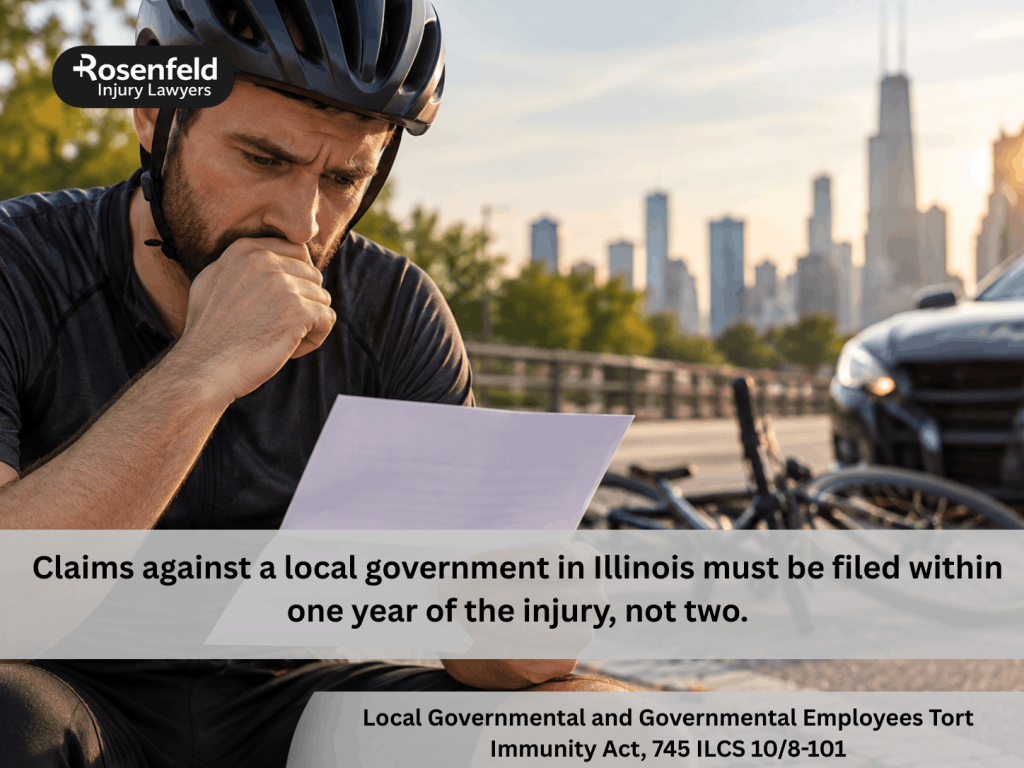
If your crash involved a local government vehicle, employee, or a dangerous public roadway maintained by a city, county, or other local entity, a shorter deadline applies. Under 745 ILCS 10/8-101 of the Local Governmental and Governmental Employees Tort Immunity Act, you generally have just one year from the date of injury to file the lawsuit itself, not a separate notice. Illinois’ old pre-suit notice requirement for these claims was repealed years ago, so the one-year filing deadline is what actually matters now. This scenario often comes up on Chicago’s most dangerous roads for cyclists, where poor maintenance or design by a local government may be a factor in the crash.
Missing the filing window almost always ends your case. Acting quickly preserves your right to pursue a bicycle accident lawsuit if the insurer will not settle.
Step 7: Talk to a Bicycle Accident Lawyer
Handling a denied claim alone puts you against a team of adjusters and defense lawyers. Leveling that field is exactly what a dedicated cyclist injury attorney does, while also helping you understand issues such as treating road rash after a bicycle crash and documenting related medical expenses.
Handling a denied claim alone puts you against a team of adjusters and defense lawyers. Leveling that field is exactly what a dedicated cyclist injury attorney does.
A lawyer investigates the crash, gathers the right evidence, calculates the full value of your damages, and negotiates from a position of strength. If the insurer still refuses, your attorney can file suit and take the matter to court before the deadline to file a bike accident lawsuit in Illinois.
What Compensation Can You Still Recover After a Denial?
A denial does not erase the value of your losses. Once your claim moves forward, you may be entitled to recover several categories of damages that factor into bicycle accident settlements.
Potential compensation in a bicycle injury case includes:
- Past and future medical expenses for treatment, surgery, and rehabilitation
- Lost wages and reduced earning capacity if your injuries keep you from work
- Pain and suffering, and the emotional toll of the crash
- Property damage to repair or replace your bicycle and gear
A thorough valuation often reveals that the insurer’s original offer, or its denial, badly undervalued your claim. Looking at the average bicycle accident settlement in Illinois can give you a realistic benchmark for what your case might be worth.
FAQ
Can I still get compensation if my bicycle accident claim was denied?
Yes. A denial is not final. With stronger evidence, a formal appeal, or a lawsuit, many denied bicycle accident claims still result in fair compensation.
How long do I have to act after a bicycle accident claim is denied in Illinois?
Illinois generally allows 2 years from the date of injury to file a personal injury lawsuit. Government-related claims may require a notice within one year, so act promptly.
Why did the insurance company deny my bicycle accident claim?
Common reasons include disputed fault, comparative negligence arguments, insufficient evidence, missed deadlines, or claims that injuries predate the crash.
Should I accept the insurance company’s first settlement after a denial?
Not without legal advice. Initial offers are often far below the true value of your medical bills, lost wages, and long-term injury costs.
Do I need a lawyer to appeal a denied bicycle accident claim?
You are not required to, but an experienced bicycle accident attorney significantly improves your odds of reversing the denial and maximizing your recovery.
Can I file a complaint against the insurance company that denied my claim?
Yes. You can file a free complaint with the Illinois Department of Insurance’s Consumer Services division if you believe an insurer mishandled your claim. This is separate from filing a lawsuit, it doesn’t replace legal action, and it does not extend any deadline you’re working against.
Is a denied claim the same as a bad faith denial?
No. Most denials are ordinary disputes over liability, fault, or evidence, and don’t rise to bad faith. Bad faith is a narrower legal concept that generally applies to your own insurer under 215 ILCS 5/155, where the conduct in handling your claim was unreasonable and vexatious, not just a disagreement you lost.
Get Help Reversing a Denied Bicycle Accident Claim
A denied bicycle accident claim is a setback, not a defeat. The right steps, taken quickly, can put your case back on track and hold the at-fault party responsible for the harm they caused.
You should not have to fight an insurance company alone while you heal. Let our team review your denial, build the evidence, and pursue the compensation you deserve, starting with the importance of a police report in a bicycle accident case.
Send us your denial letter, and we’ll review it free of charge to tell you exactly why the insurer said no and what your realistic next move is. We handle bicycle injury cases on a contingency-fee basis, so you pay nothing upfront and owe us nothing unless we recover money for you.
Reach out today for your free, no-obligation consultation, and let us put our experience to work protecting your recovery.
 Legally Reviewed By
Attorney Jonathan Rosenfeld
Reviewed by Attorney Jonathan Rosenfeld The material on this page has been legally reviewed by Attorney Jonathan Rosenfeld of Rosenfeld Injury Lawyers LLC. Mr. Rosenfeld and his team have experience representing injured cyclists in bicycle accident cases in Chicago. With a focus on personal injury law, they help bicycle accident victims understand their legal options and pursue compensation for medical expenses, lost wages, and other damages resulting from their injuries.
Visit Us