Chicago Bicycle
Accident Lawyer
Accident Lawyer
Injured in a Bicycle Accident? We Can Help.



Knowing how to prevent bike theft in Chicago is an essential skill for every cyclist. Chicago’s growing population of bicyclists is using an expanding bike lane network, more bike shops, and plenty of off-street trails.
Whether you use a bike for commuting, recreational activities, or both, one of your main concerns should be preventing bicycle theft. Unfortunately, thieves steal many bikes each year in the Windy City. This Chicago bicycle safety guide explains practical ways to protect your bike, register it, and report it if it is stolen. Another danger you may face is getting hurt in a bicycle accident; if so, seek legal guidance from our Chicago bike accident law firm for your claim.
To prevent bike theft in Chicago, use a hardened U-lock or chain, secure the frame and rear wheel to a fixed rack in a well-lit, busy spot, and record your serial number. Register the bike with the Chicago Police Department, and lock it at home too, not just downtown.
First, it is important to understand when, where, and how bikes are most likely to be stolen. High-risk areas include more dangerous neighborhoods, busy intersections, university campuses, and downtown. For example, Washington Park, the Loop, and the intersection of North Avenue and Damen Avenue are common locations for bike theft.
Thieves are most active at night, so securing your beloved ride is most important then. Many bikes are even stolen from front yards or garages at these times. August is the month with the most reported stolen bikes in the city. Bikes must not be abandoned or left in public ways according to municipal code 9-52-071.
Bike thieves often cut through small or cheap locks or simply pick a brief moment when your bicycle is unattended. Less expensive bikes are stolen more often, so be careful if you own a hybrid, city, or commuter bike.
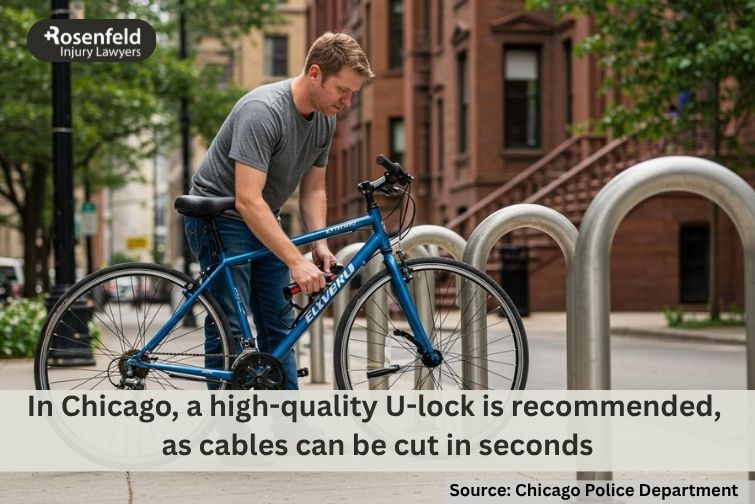
The best way to avoid theft is to lock your bike every time. Your lock is your first line of defense against theft, so it is worth investing in a high-quality one. U-locks are popular because they secure the wheel and frame. Chain locks offer more flexibility and strength.
A folding lock is a more convenient, compact option. A cable lock can work in some cases, but thieves can cut through it relatively easily. Locking accessories are a wise strategy if you want to protect wheels and seats.
For stronger bicycle security, choose a lock that makes it difficult to cut, pry, or manipulate the bicycle free from its parking point.
If you consistently lock your bike with a quality lock, the chances of theft will decrease.
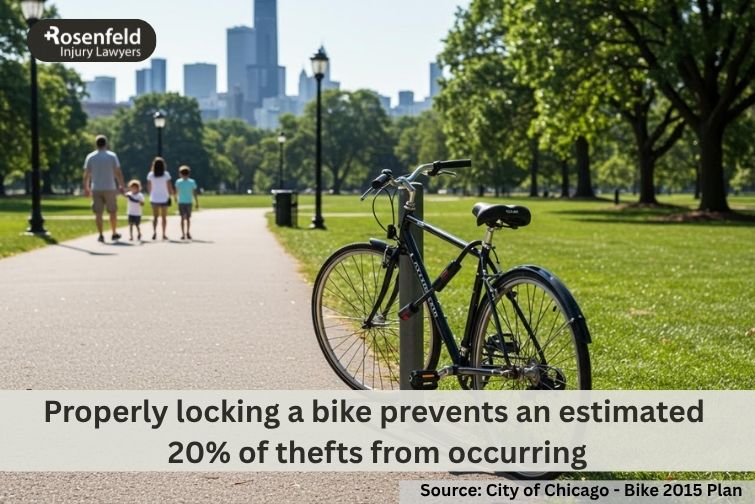
Even with a strong lock, you must know how to use it properly to secure the bike. Look for a well-lit area with high foot traffic, which would deter most thieves. Choose a strong lock and secure the frame and rear wheel to a solid object, like a bike rack or corral.
Make sure the rack or corral is secured to the ground and cannot be removed. Keep the lock off the ground with the keyhole pointed downward.
Always lock your bike in order of importance, starting with the frame, then the rear wheel, and then the front wheel, if necessary.
When possible, avoid leaving excess space inside the lock because extra room can make it easier for a thief to use tools against the lock. Check that the frame is secured to the rack, not just a wheel.
You can take additional security steps to deter bike thieves or make it easier to locate your stolen bike. Register your bicycle with the Chicago Police Department’s online bicycle registration system using the bike’s serial number.
Take a clear photograph of the bicycle and record its make, model, color, and serial number in a safe place. These details can make a police report and stolen-bike registry listing easier to complete.
Use a GPS tracker on the bike so it can be located if it is stolen. Remove the quick-release components, such as the wheels or seat, to make the bike less appealing to thieves.
When you are home, store the bike in a secure location. Don’t leave it on the porch or in the front yard. Instead, put it in your garage and lock the door. Making the bike less appealing visually will also deter many thieves.
For additional local guidance, see our Chicago bicycle safety guide
If your bicycle is stolen, knowing how to report a stolen bike in Chicago can help create a record of the theft and provide the information you need for insurance or recovery efforts.
1. Report it to the Chicago Police Department. File a report at your local district headquarters or by calling 311. Get the report number, and have the bicycle’s make, model, color, and serial number available.
2. Register the theft with the Chicago Stolen Bike Registry and Bike Index. The City of Chicago points cyclists toward bicycle theft prevention and registry resources. Listing the bicycle can help bike shops, buyers, and others identify a stolen bicycle by its serial number.
3. If you registered the bicycle with CPD in advance, flag the theft. CPD’s online bicycle registration system can connect the bicycle’s identifying information with your contact information, which may help if the bicycle is recovered.
4. Check resale channels. Check online marketplaces and local pawn shops, and alert local bike shops and cycling groups that may come across the bicycle. You can also share the theft with Chicago cycling clubs and organizations that may help spread the word.
5. Contact your insurer. Homeowners or renters insurance may cover bicycle theft, depending on the policy, coverage limits, and deductible. Keep your police report number and bicycle records available when contacting your insurer.
If your bike disappeared overnight, it was likely stolen, not abandoned. Under Chicago Municipal Code 9-52-071, the City places a placard on a bicycle considered abandoned and waits at least seven days before removing it. See our Chicago bicycle laws for additional information.
Chicago Police Department records reported by the Chicago Sun-Times show 1,283 reported bicycle thefts in 2023, a 29% increase from 2021. Victims lost an average of $634 per reported theft. The actual number may be higher because not every bicycle theft is reported to police.
The Loop, Streeterville, and West Loop have reported high numbers of bicycle thefts. Bikes are commonly taken from sidewalks, streets, and residential front yards. Lakefront areas and locations near CTA stations can also present theft risks because they attract cyclists and pedestrians.
To report a stolen bicycle, contact the Chicago Police Department at your local district headquarters or by calling 311. Get the police report number and provide identifying information such as the make, model, color, and serial number. Then list the bicycle with the Chicago Stolen Bike Registry or Bike Index.
Yes. CPD provides an online bicycle registration system. Registration records identifying information such as the bicycle’s serial number and your contact details, which can help connect a recovered bicycle with its owner. Photographing the bike and keeping its identifying information is also useful.
It is unlikely if the bicycle disappeared quickly. Under Municipal Code 9-52-071, the City places a placard on a bicycle it considers abandoned and waits at least seven days before removing it. A bicycle that disappears overnight is more likely to have been stolen.
Often, a homeowners or renters policy may cover a stolen bicycle, subject to the policy’s deductible, limits, and exclusions. Check your policy and compare the bicycle’s value with the deductible. Having the police report number and proof of ownership available can also help.
Bicycle accident injuries are common, especially in busy cities like Chicago. If you were hurt in a bike crash because of someone else’s negligence, our law firm can help you recover compensation for your damages. Contact our Illinois bike accident law firm today to schedule a free legal consultation about your case.
 Legally Reviewed By
Attorney Jonathan Rosenfeld
Reviewed by Attorney Jonathan Rosenfeld The material on this page has been legally reviewed by Attorney Jonathan Rosenfeld of Rosenfeld Injury Lawyers LLC. Mr. Rosenfeld and his team have experience representing injured cyclists in bicycle accident cases in Chicago. With a focus on personal injury law, they help bicycle accident victims understand their legal options and pursue compensation for medical expenses, lost wages, and other damages resulting from their injuries.