- Free Consultation: 312-646-3708 Tap Here To Call Us




Why Independent Witnesses Can Strengthen Bicycle Injury Cases?


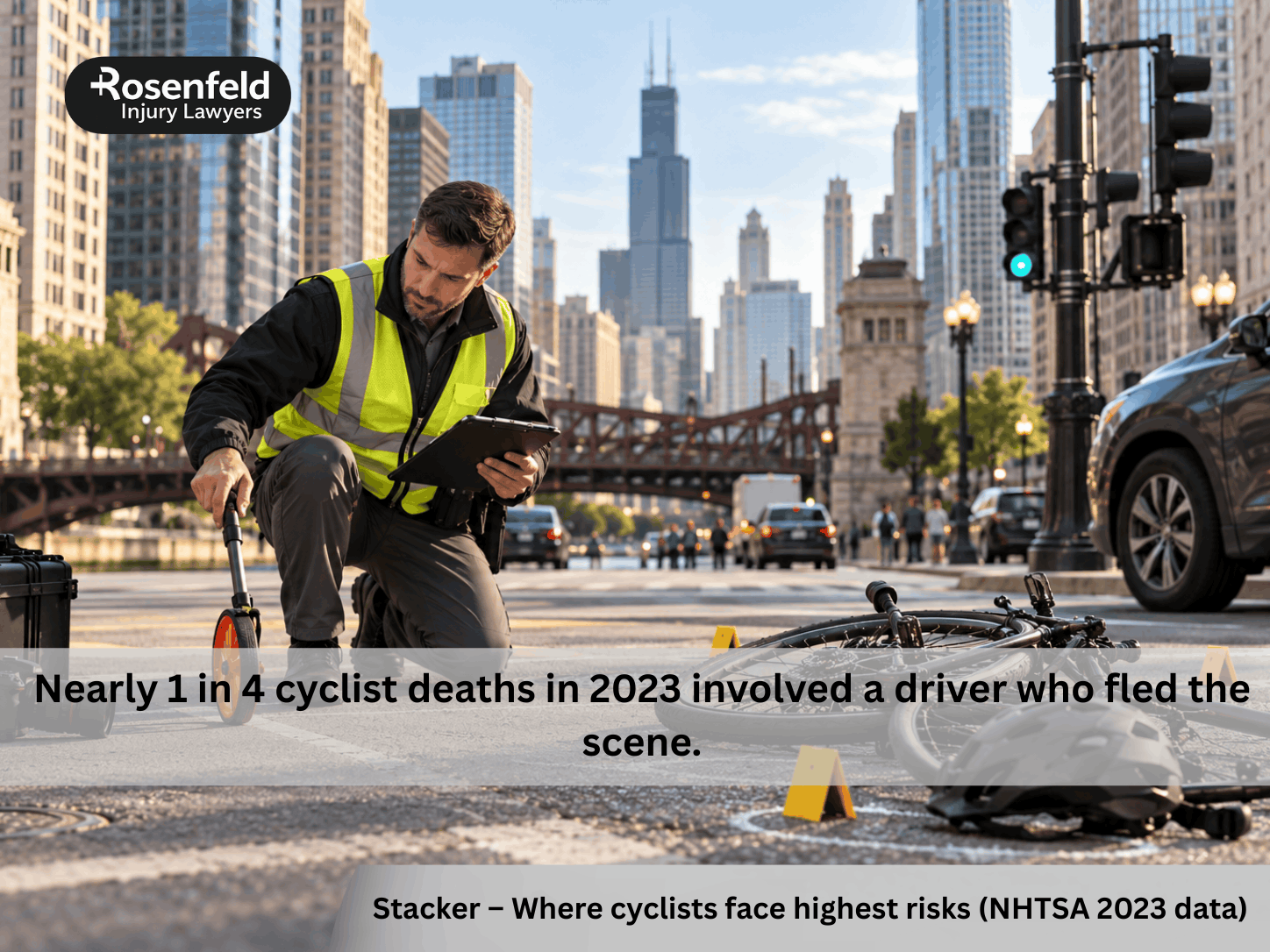
A bike crash on a Chicago street often turns into a quick argument about what really happened. The driver says you swerved. You know they turned without looking. Without outside proof, the case can stall into your word against theirs. That is where bicycle accident witness statements can change the picture. A neutral person who saw the crash, and has no reason to favor either side, can give an insurance adjuster, a judge, or a jury a clearer view of the moment of impact.
In this blog post, we’ve covered what an independent witness is, why their account often carries weight, and how to protect that evidence after a crash in Chicago. Read on to know.
What Is an Independent Witness in a Bicycle Accident Case?
An independent witness is a person who saw or heard the crash, or the moments just before it, and has no personal tie to the cyclist, the driver, or anyone else involved. Think of a pedestrian waiting at a crosswalk on Milwaukee Avenue, a delivery driver parked nearby, or a shop employee who heard brakes and looked up. They do not know you, they do not work for the driver, and they gain nothing from how the claim turns out. That neutral position is exactly what gives their eyewitness account value. A friend riding next to you can still be a helpful witness, but an insurer may argue that loyalty shaped what they remember. A stranger is much harder to brush aside.
How Independent Witnesses Can Help Establish Liability
To recover compensation, you generally need to show the driver acted carelessly and that this carelessness caused your injuries. Proof of driver negligence usually comes from several sources working together: the police report, photos, camera footage, physical damage, and what people saw. Witness accounts often tie those pieces together. This matters even more in Illinois.
Here is how a witness can help prove what went wrong:
- Confirming traffic violations: A witness may have seen the driver run a red light, roll a stop sign, or fail to yield.
- Describing turning crashes: In right-hook and left-hook collisions, a bystander can say the driver turned across your path without checking the bike lane.
- Backing up dooring claims: Illinois law (625 ILCS 5/11-1407) and Chicago’s municipal code bar opening a car door into traffic until it is safe. A witness can confirm the door opened suddenly.
- Rebutting blame on the cyclist: If the driver claims you darted out or rode without lights, a witness can say otherwise.
- Filling gaps in the police report: Officers usually arrive after the crash. Statements from people who were there can add detail the report misses.
What Makes an Independent Witness Credible?
Not every account carries the same weight. Insurers and defense attorneys look closely at witness credibility, and a few factors tend to decide how much a statement helps.
No Connection to Either Party
- The witness is not a friend, relative, coworker, or riding partner of anyone involved.
- They have no financial stake in the outcome.
A Clear Line of Sight
- They were close enough to see the crash and had no parked truck, pole, or glare blocking the view.
- They can explain where they were standing and what drew their attention.
Consistent Details Over Time
- What they told police at the scene matches what they say weeks later.
- Small memory gaps are normal, but major changes invite doubt.
Agreement With Physical Evidence
- Their description fits the damage to the bike and vehicle, the debris pattern, and any video.
- A story that matches camera footage is very hard to challenge.
A Statement Taken Early
- Memories fade quickly, so a written witness statement made soon after the crash is often the most reliable record.
- A name, phone number, and short note at the scene can make a later formal statement possible.
How a Chicago Bicycle Accident Lawyer Can Help With Witness Evidence
While you focus on recovery, a Chicago bicycle accident lawyer can track down, preserve, and present witness evidence before it slips away. Their role typically includes:
- Reviewing the police report for witness names and contact details.
- Reaching out to witnesses quickly, while their memories are still fresh.
- Taking clear, accurate statements that reflect what the person actually saw.
- Canvassing nearby businesses, CTA stops, and residences for people or cameras that captured the crash.
- Comparing witness accounts with photos, video, and vehicle damage to spot strengths and weak points.
- Preparing witnesses for depositions or trial if the case does not settle.
- Responding when an insurance adjuster tries to discredit a helpful witness.
How Chicago Bike Injury Lawyers Can Help You Build a Stronger Case?
A strong bike injury claim rarely rests on one piece of proof. It usually combines medical records, the police report, photos, video, and the words of people who saw the crash. At Chicago Bike Injury Lawyers, our team works with riders hurt in dooring, right-hook, left-hook, sideswipe, and hit-and-run crashes across Chicago and the surrounding suburbs. We gather crash evidence early, reach out to witnesses, and deal with insurance companies so you can focus on healing. Your first consultation is free, and we work on a contingency fee basis, which means you owe no attorney fee unless we recover compensation for you. Contact us now to talk about your situation.
FAQs
What is an independent witness in a bicycle accident case?
An independent witness is someone who saw or heard the crash and has no relationship with the cyclist, the driver, or anyone else involved. Because they have nothing to gain, their account is often viewed as more objective.
Are independent eyewitnesses better than witnesses who know the cyclist?
Often, yes. A friend or family member can still offer useful testimony, but insurers may argue their loyalty colored their memory. A neutral stranger is harder to challenge on bias.
What if the witness did not see the entire bicycle accident?
A partial account can still help. A witness who saw only the driver speeding, looking at a phone, or running a light before impact can support other evidence about how the crash happened.
Can a witness help if the driver denies causing the crash?
Yes. When the driver denies fault, a neutral account of the driver’s actions can contradict that denial and help show who was responsible, especially when it matches photos, video, or vehicle damage.
Can I use a witness statement in an insurance claim?
Yes. Witness statements are commonly shared with insurers as part of a claim. Before you give your own recorded statement to the other driver’s insurer, it is wise to speak with a lawyer.
What if a witness changes their story?
A changed account can weaken its value, but an earlier written or recorded statement may be used to question the inconsistency. This is one reason to document statements soon after the crash.
What if nobody witnessed my bicycle accident?
You may still have a valid claim. Fault can be shown through traffic or business camera footage, the police report, scene photos, vehicle and bike damage, medical records, and sometimes crash reconstruction.
How can I find witnesses after a Chicago bicycle accident?
Check the police report for names, ask nearby businesses and residents, look for people at nearby CTA stops, and post in local neighborhood groups. A lawyer can also canvass the area and follow up with potential witnesses.
Take Professional Assistance from Our Chicago Attorneys
Hurt in a bike crash in Chicago? Talk with Chicago Bike Injury Lawyers today. Call now for a free, no-obligation consultation. We are available 24/7, and there is no fee unless we win.
 Legally Reviewed By
Attorney Jonathan Rosenfeld
Reviewed by Attorney Jonathan Rosenfeld The material on this page has been legally reviewed by Attorney Jonathan Rosenfeld of Rosenfeld Injury Lawyers LLC. Mr. Rosenfeld and his team have experience representing injured cyclists in bicycle accident cases in Chicago. With a focus on personal injury law, they help bicycle accident victims understand their legal options and pursue compensation for medical expenses, lost wages, and other damages resulting from their injuries.
Visit Us