- Free Consultation: 312-646-3708 Tap Here To Call Us




When a Driver Kills a Cyclist in Illinois: Criminal Charges vs. a Civil Wrongful Death Claim


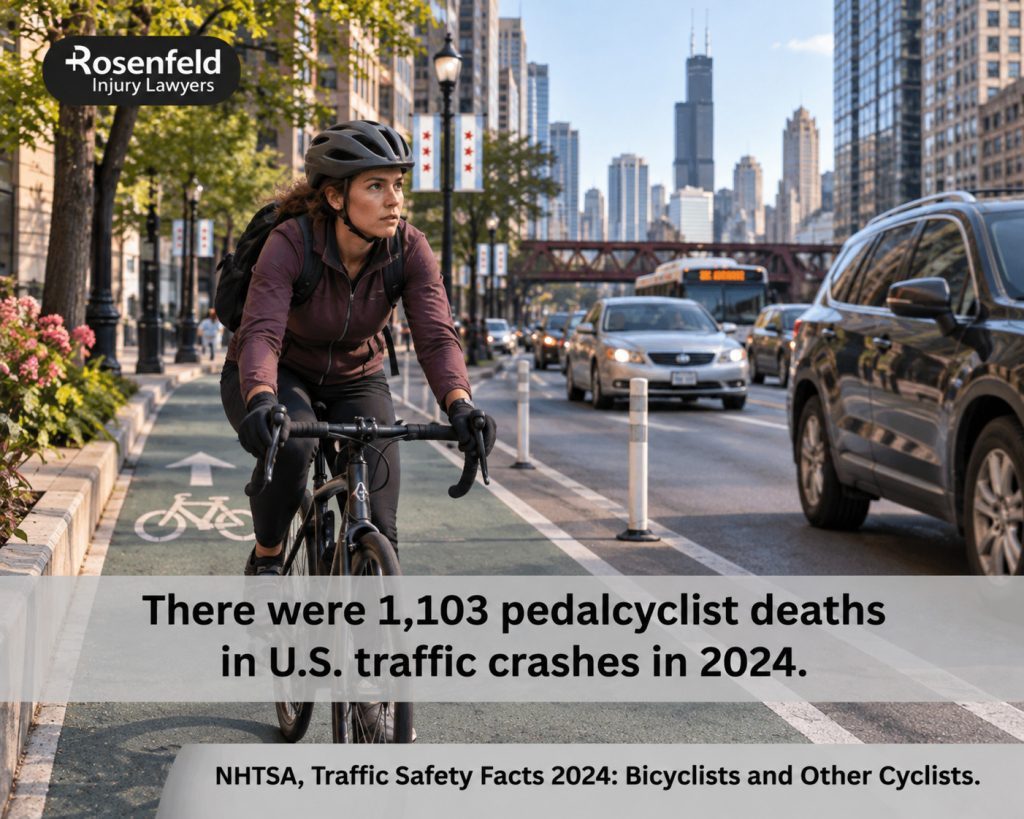
A driver killed cyclist Illinois criminal vs civil case involves two separate legal tracks. The state brings the criminal case to punish the driver. The family, through the estate’s personal representative, brings the civil wrongful death claim to recover losses. Each case has its own burden of proof, deadline, and outcome, and one does not decide the other.
Here is how the two paths work, in plain terms.
How Do the Two Cases Differ?
The criminal case asks whether the driver broke the law and deserves punishment. The civil case asks who must pay for the harm done to the family. Each follows different rules and has a different goal.
| Criminal case | Civil wrongful death claim | |
| Brought by | The state, through prosecutors | The estate’s personal representative |
| Goal | Punishment, such as prison or fines | Money for the family’s losses |
| Proof needed | Beyond a reasonable doubt | More likely than not |
| Family’s role | Witnesses and victim impact statements | Beneficiaries of the claim |
Because the proof standard is lower, a family can win a civil claim even when prosecutors lose or never file charges. Every driver killed cyclist Illinois criminal vs civil case is built on its own evidence.
Who Files Each Case?
Prosecutors file criminal charges for the state. In a civil claim, the personal representative of the cyclist’s estate files the lawsuit, not the relatives directly. The Illinois Wrongful Death Act sets that rule.
In a driver killed cyclist Illinois criminal vs civil case, the family controls only one of the two paths. Prosecutors decide whether to charge the driver. Families can share what they know and ask questions. They cannot force charges.
The civil side works differently. A court usually names a personal representative, often a spouse or adult child. That person files the claim for the benefit of the surviving spouse and next of kin.
What Criminal Charges Can a Driver Face?
A driver who unintentionally kills someone while driving can face reckless homicide. Prosecutors may add related charges, such as leaving the scene or driving under the influence. Penalties depend on the facts.
A driver killed cyclist Illinois criminal vs civil case often starts on the criminal side, because police investigate first. Reckless homicide is defined in Section 9-3 of the Illinois Criminal Code. Recklessness means more than a simple mistake. It means the driver ignored a clear risk.
The charge is a felony. Certain circumstances can increase the charge or penalty, including specific violations in construction zones and qualifying school-zone situations.
What Does a Wrongful Death Claim Cover?
A wrongful death claim seeks money for the losses a family suffers after a preventable death. If the cyclist had lived, they could have sued the driver. The Illinois Wrongful Death Act sets the rules.
The civil half of a driver killed cyclist Illinois criminal vs civil case is about money and accountability, not prison. Families commonly seek:
- Lost income and benefits the cyclist would have earned
- Loss of companionship, guidance, and care
- Grief, sorrow, and mental suffering
- Funeral and burial costs
Illinois has a Survival Act. It lets the estate pursue claims the cyclist held before death, such as medical bills if they lived for a time after the crash. Many families bring both claims together.
How Long Do Families Have to File?
Most Illinois wrongful death claims must be filed within two years of the date of death. The clock runs from the death, not the crash. Missing this statute of limitations can end the claim for good.
Deadlines differ in a driver killed cyclist Illinois criminal vs civil case, and the civil clock is the one families miss. A narrow exception exists when a death results from violent intentional conduct. Claims involving a government body, such as a road defect, can bring shorter deadlines and special notice rules.
Can Both Cases Move Forward at Once?
Yes. Prosecutors and the family’s lawyer can pursue their cases at the same time. A civil case may be paused while the criminal case runs. Neither outcome automatically decides the other.
A criminal court may find a driver not guilty because the proof fell short of reasonable doubt. The civil claim can still succeed under the lower standard. In a driver killed cyclist Illinois criminal vs civil case, timing and strategy matter.
What Should Families Do First?
Start by protecting evidence and getting legal guidance. Quick steps keep options open. Early steps in a driver killed cyclist Illinois criminal vs civil case protect both paths.
- Get the police report number and the name of the investigating agency.
- Keep the bike, helmet, and clothing. Do not repair or discard them.
- Save photos, video, and witness contact details.
- Avoid recorded statements to the driver’s insurer until you have legal advice.
- Keep medical, funeral, and income records in one folder.
Where Can Families Get Help Now?
Talk with a lawyer who understands cycling crashes before deadlines start to shrink. Chicago Bike Injury Lawyers handles bicycle accident cases on a contingency fee basis and offers round-the-clock service.
Families can use the contact page to describe what happened and ask what comes next.
FAQs About Criminal and Civil Cases After a Cyclist Death
Yes. The state can prosecute the driver while the estate files a wrongful death lawsuit. Each case follows its own rules and can move forward at the same time.
No. A not guilty verdict does not end a civil wrongful death claim. Civil courts use a lower standard of proof, so the family can still pursue compensation.
The cyclist’s surviving spouse and next of kin receive the recovery. The court approves how the money is divided among them.
Most wrongful death lawsuits must be filed within two years of the date of death.
No. A family can bring a civil claim even if prosecutors never charge the driver. Criminal and civil cases after a fatal crash stand on their own.
 Legally Reviewed By
Attorney Jonathan Rosenfeld
Reviewed by Attorney Jonathan Rosenfeld The material on this page has been legally reviewed by Attorney Jonathan Rosenfeld of Rosenfeld Injury Lawyers LLC. Mr. Rosenfeld and his team have experience representing injured cyclists in bicycle accident cases in Chicago. With a focus on personal injury law, they help bicycle accident victims understand their legal options and pursue compensation for medical expenses, lost wages, and other damages resulting from their injuries.
Visit Us