- Free Consultation: 312-646-3708 Tap Here To Call Us




8 Ways Cyclists Can Reduce the Risk of Dooring Accidents in Chicago


Cycling through Chicago is one of the best ways to get around the city, but it comes with real risks. One of the most common and preventable dangers you’ll face is a dooring accident: getting struck by a car door that opens suddenly into your path.
Avoiding dooring accidents starts with understanding the “door zone” and adopting defensive cycling habits that help keep you out of harm’s way. Whether you commute daily on a Divvy bike or ride your own, a few small habit changes can make a big difference in your safety. The Illinois Department of Transportation’s 2023 City Crash Summaries provide annual crash data for communities across the state, including Chicago, reinforcing the importance of roadway awareness and defensive cycling practices.
At Chicago Bike Injury Lawyers, we’ve seen how quickly these accidents happen and how serious the injuries can be. Below, we break down eight practical strategies for avoiding dooring accidents on Chicago streets. If you’ve already been hurt in one, we offer free consultations to help you understand your options.
1. Understand the Door Zone Before You Ride
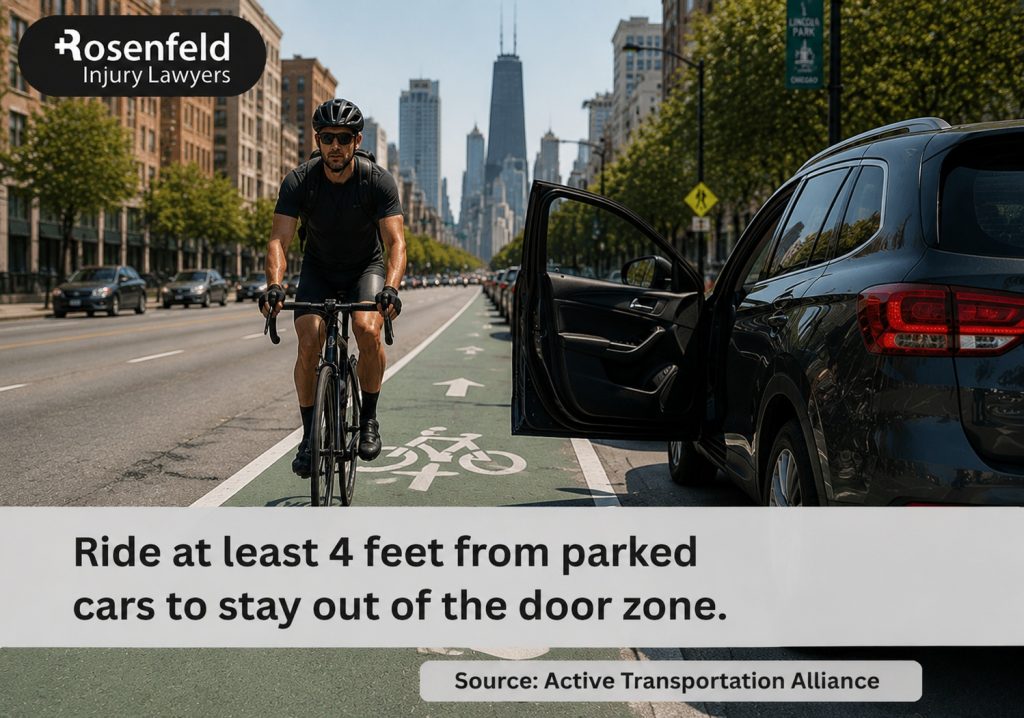
The “door zone” is the space beside parked vehicles where an opening car door can reach. It’s usually about three to five feet wide. Riding through this zone puts you at constant risk, since opening car doors can swing out with little to no warning.
Before you ride down any street with parked vehicles, scan ahead and identify where the door zone starts. Staying mentally aware of this space is one of the simplest ways to start preventing dooring accidents before they happen.
2. Keep a Safe Passing Distance from Parked Cars
Riding safely near parked cars means maintaining a safe distance between yourself and the vehicles beside you. A safe passing distance is at least 3 feet, more if traffic allows.
This single habit is one of the most effective safety tips for cyclists. It gives you a buffer if a door opens unexpectedly, and it reduces the split-second reaction time you’d otherwise need.
3. Watch for Rideshare and Delivery Vehicles
Rideshare vehicles and delivery vehicles are common in Chicago’s busy corridors, and they often stop suddenly to pick up passengers or drop off packages. Passengers exiting these vehicles are frequently distracted, checking phones instead of checking mirrors.
Treat every stopped rideshare or delivery vehicle as a potential hazard. Slow down, widen your path if you can, and stay alert near loading zones and pickup spots.
4. Use Chicago’s Protected Bike Lanes When Possible
Protected bike lanes physically separate cyclists from parked cars, which significantly reduces the risk of dooring. The Chicago Department of Transportation (CDOT) has expanded these lanes across the city as part of its broader traffic safety and Vision Zero Chicago efforts.
When a route offers a protected lane, take it. Standard bike lanes painted alongside parked cars still fall within the door zone, so they require extra caution even though they may feel safer.
5. Make Eye Contact and Anticipate Driver Behavior
Traffic awareness isn’t only about watching the road; it’s about reading people. Look for motor vehicle occupants sitting in parked cars, especially if you see movement inside. A driver reaching for a bag or a passenger unbuckling a seatbelt signals that a door may open soon.
Making eye contact with drivers when possible helps confirm they’ve seen you. This small step supports cyclist visibility and gives you a moment to react before a door swings open.
6. Practice Defensive Cycling Habits
Defensive cycling means riding as if every car door could open at any moment. This includes a quick shoulder check before merging around parked vehicles, using hand signals to alert nearby traffic, and never assuming a stopped car is truly empty.
These safe cycling practices apply to both new riders and experienced commuters. Consistent habits, repeated every ride, are what actually prevent accidents over time.
7. Improve Your Visibility on the Road
Being seen is just as important as seeing. Bright clothing, working lights, and a properly fitted bicycle helmet all support helmet safety and overall visibility, especially during Chicago’s shorter daylight hours.
Mirror checks on your bike, if equipped, also help you monitor vehicles approaching from behind. Combined with reflective gear, these tools support urban cycling safety in low-light conditions.
8. Know the Illinois Dooring Law and Your Rights
Illinois law requires drivers and passengers to check for cyclists before opening a car door. Under the Illinois Vehicle Code, commonly referred to as the Illinois Dooring Law, opening a door into moving traffic or a passing cyclist can result in liability for the driver or passenger.
Knowing this law matters not just for bicycle accident prevention but also for understanding your rights if you’re ever injured. Many cyclists don’t realize they may have a valid claim after a dooring incident, underscoring the role of bicycle safety education and clear legal guidance.
A Note on the Dutch Reach
One simple technique gaining attention in Chicago cycling safety circles is the Dutch Reach. This method asks drivers and passengers to open their car door with the hand farthest from it, which naturally turns their shoulders and prompts a shoulder check for approaching cyclists. If you drive as well as bike, adopting this habit yourself helps protect other riders too.
Ride Smart, Ride Safe
Avoiding dooring accidents comes down to awareness, distance, and consistent habits every time you ride. Chicago’s streets can be unpredictable, but small changes to how you ride near parked cars can meaningfully lower your risk.
If you or someone you know has been injured in a dooring accident, we are here to help. We offer free, no-obligation consultations and work on a contingency-fee basis, so you don’t pay unless we recover money for you. Reach out today to discuss your case and learn what options are available to you.
Frequently Asked Questions
The door zone is the space beside parked cars where an opening door can reach, typically three to five feet, requiring cyclists to keep extra distance while riding.
Cyclists should ride at least 3 feet from parked vehicles, watch for movement inside cars, and avoid lingering directly beside doors whenever traffic conditions allow.
Illinois law requires drivers and passengers to check for cyclists before opening a door, and violating this duty can create liability for injuries caused by dooring.
Yes, protected bike lanes entirely separate cyclists from parked cars, removing much of the door-zone risk found in standard painted bike lanes near curbside parking.
Seek medical attention first, document the scene if possible, and consult a bicycle accident attorney to understand your rights and potential compensation options.
 Legally Reviewed By
Attorney Jonathan Rosenfeld
Reviewed by Attorney Jonathan Rosenfeld The material on this page has been legally reviewed by Attorney Jonathan Rosenfeld of Rosenfeld Injury Lawyers LLC. Mr. Rosenfeld and his team have experience representing injured cyclists in bicycle accident cases in Chicago. With a focus on personal injury law, they help bicycle accident victims understand their legal options and pursue compensation for medical expenses, lost wages, and other damages resulting from their injuries.
Visit Us